
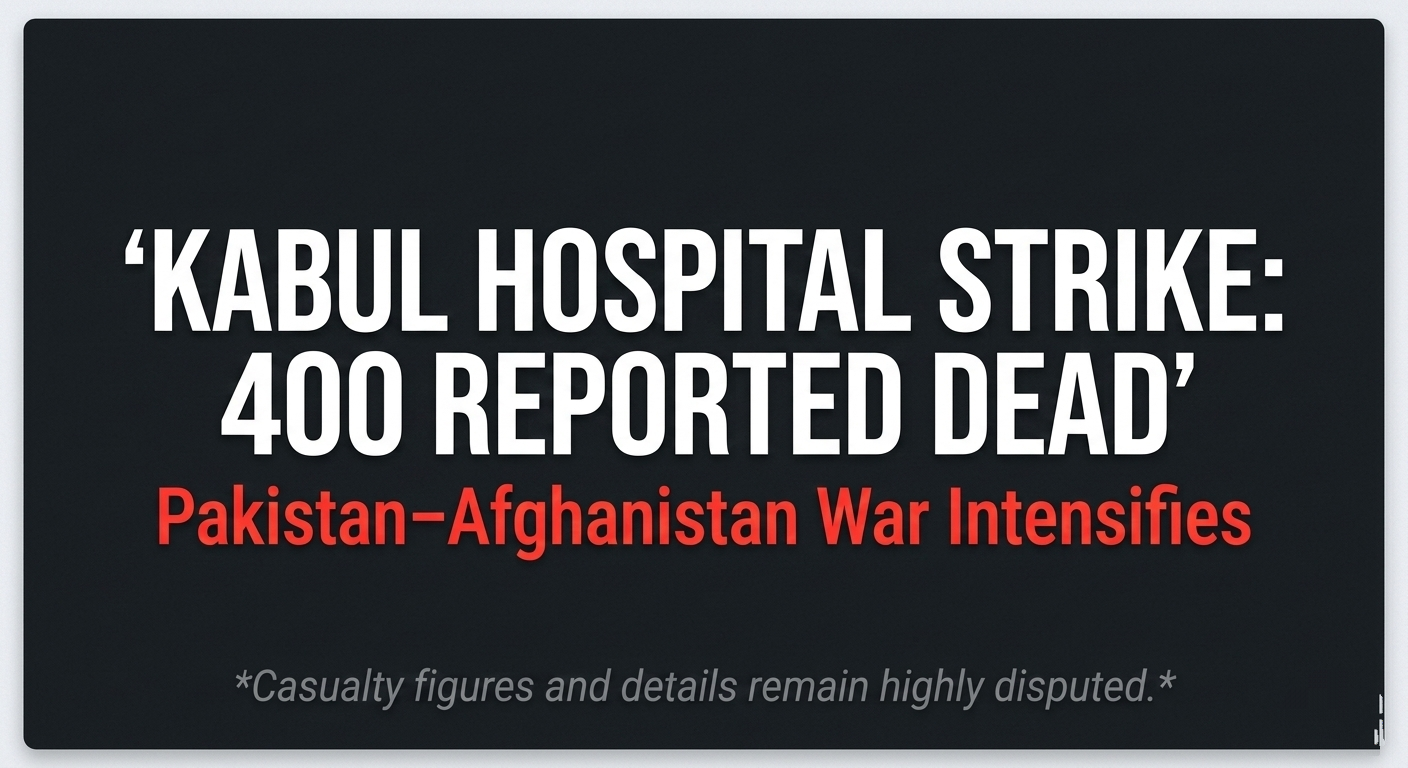
On March 16, 2026, the Pakistan–Afghanistan conflict escalated into one of its deadliest chapters. An airstrike hit the Omid Addiction Treatment Hospital in Kabul, killing more than 400 people and injuring 250 others, according to Afghan officials. Pakistan denied striking the hospital, claiming its operations were aimed at militant infrastructure. The tragedy has ignited outrage across Afghanistan and raised alarm internationally.
The Incident
Rescue teams described scenes of chaos: collapsed wards, raging fires, and desperate survivors searching for loved ones. Afghan officials condemned the attack as a violation of sovereignty, accusing Pakistan of deliberately targeting civilians.
Pakistan rejected the accusation, insisting its strikes were “precise” attacks on terrorist depots and installations in Kabul and Nangarhar Province.
Humanitarian Toll
- Casualties: 400+ dead, 250 injured.
- Hospital Role: A drug treatment center serving thousands of patients.
- Rescue Efforts: Firefighters and medics battled flames for hours.
- Civil Society Response: Organizations, including the Afghanistan Cricket Board, condemned the attack as a national tragedy.
Escalation of Conflict
The hospital strike was part of a broader escalation:
- Border Clashes: Mortar fire from Pakistan killed four civilians, including two children, in Khost Province.
- Drone Strikes: Pakistan’s President Asif Ali Zardari accused Afghanistan of crossing a “red line” by deploying drones that injured civilians in Pakistan.
- Open War Declaration: Zardari described the situation as “open war”, signaling a dangerous escalation in rhetoric and military engagement.
Regional & Global Implications
- Humanitarian Crisis: Civilian casualties highlight the devastating impact of modern warfare.
- Diplomatic Fallout: Both nations are entrenched in accusations, complicating mediation.
- Regional Stability: Escalation threatens South Asia’s fragile peace.
- Global Reaction: International organizations have urged restraint, but ceasefire appeals remain ignored.
The Bigger Picture
The Kabul hospital airstrike underscores how fragile peace is in South Asia. With unresolved disputes and militant activity fueling instability, the tragedy raises urgent questions about accountability, civilian protection, and the future of regional security.
FAQ
Q1: Did Pakistan admit to striking the hospital?
No. Pakistan denied targeting civilians, claiming its strikes were aimed at militant infrastructure.
Q2: How many casualties were reported?
Afghan officials reported 400+ dead and 250 injured.
Q3: What triggered the escalation?
Cross-border clashes and drone strikes injured civilians in Pakistan, prompting retaliatory strikes.
Q4: What has been the global response?
International organizations have called for restraint, but ceasefire appeals remain ignored.
Conclusion
The Kabul hospital airstrike represents a dangerous turning point in the Pakistan–Afghanistan conflict. With both sides entrenched in their narratives—Afghanistan accusing Pakistan of aggression, and Pakistan insisting on precision strikes—the humanitarian toll is devastating. Unless both nations step back, South Asia risks sliding into prolonged instability, with civilians bearing the brunt of violence.
Reference