
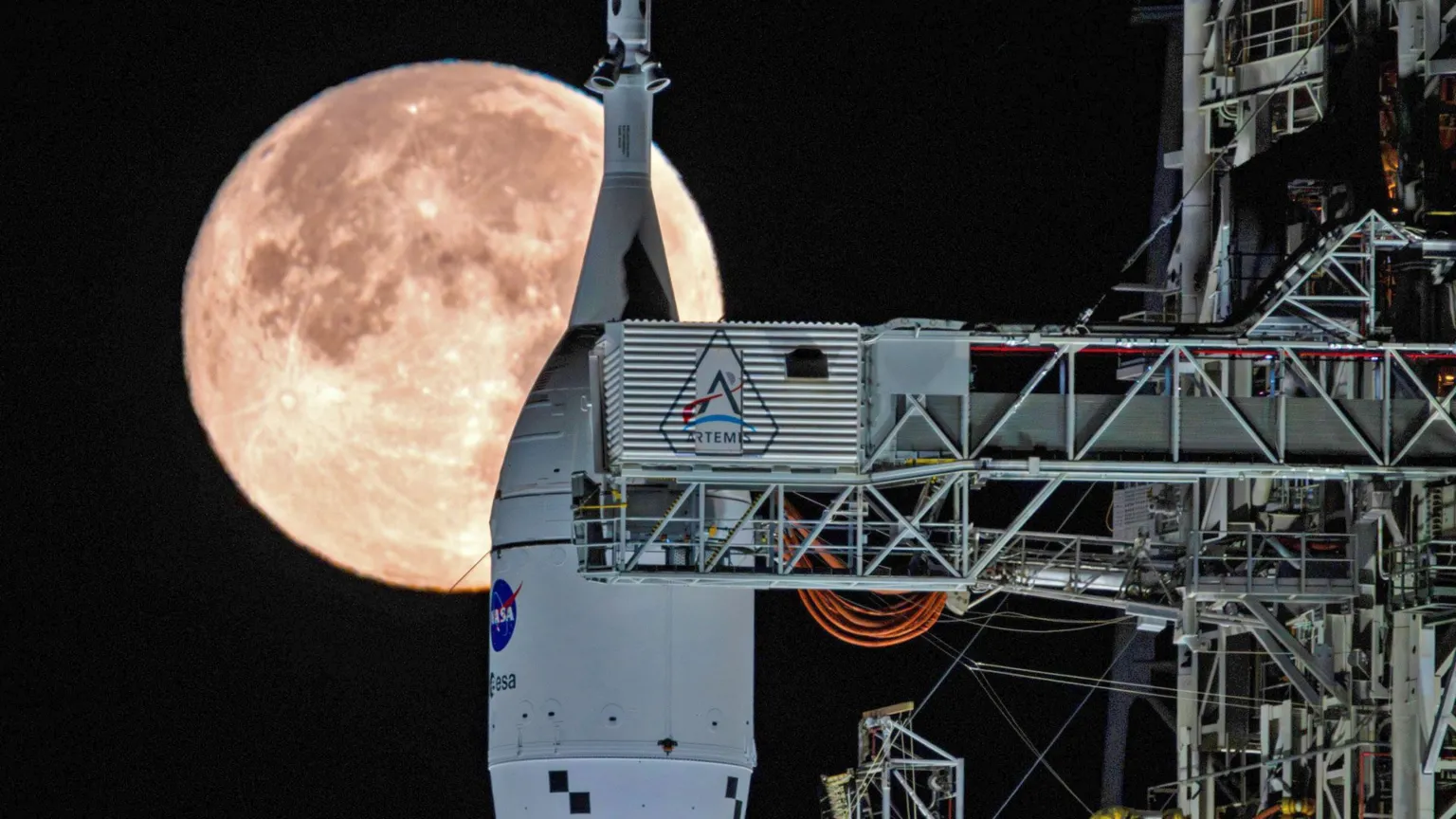
NASA has officially announced that the Artemis II mission, the first crewed journey around the Moon in more than half a century, is targeting an early March 2026 launch. This milestone marks a pivotal step in humanity’s return to deep space exploration, paving the way for future lunar landings and eventual missions to Mars.
Artemis II Mission Overview
- The Launch Date
- Scheduled for March 6, 2026 (early March 7 in the UK).
- Follows a successful “wet dress rehearsal,” where the rocket was fueled and tested through a full countdown sequence.
The Crew
- Four astronauts will embark on a 10-day journey.
- The mission will take them around the far side of the Moon before returning to Earth.
Significance
- First human mission beyond low Earth orbit since Apollo 17 in 1972.
- Designed to test life-support systems, communication, and spacecraft performance before future lunar landings.
Why Artemis II Matters
- Key Objectives
- Validate Orion spacecraft systems in real flight conditions.
- Strengthen international collaboration in space exploration.
- Inspire a new generation of scientists, engineers, and explorers.
Global Impact
- Reinforces NASA’s leadership in space exploration.
- Builds momentum toward Artemis III, which aims to land astronauts on the lunar surface.
- Positions humanity for eventual Mars missions.
Conclusion
Artemis II is more than just a mission—it’s a symbol of humanity’s enduring quest to explore the unknown. With its launch set for March 2026, the mission will mark a historic return to the Moon, bridging the gap between past Apollo achievements and future interplanetary exploration.
Reference
https://vuink.com/post/oop-d-dpbz/news/articles/c86y1g6wde3o