
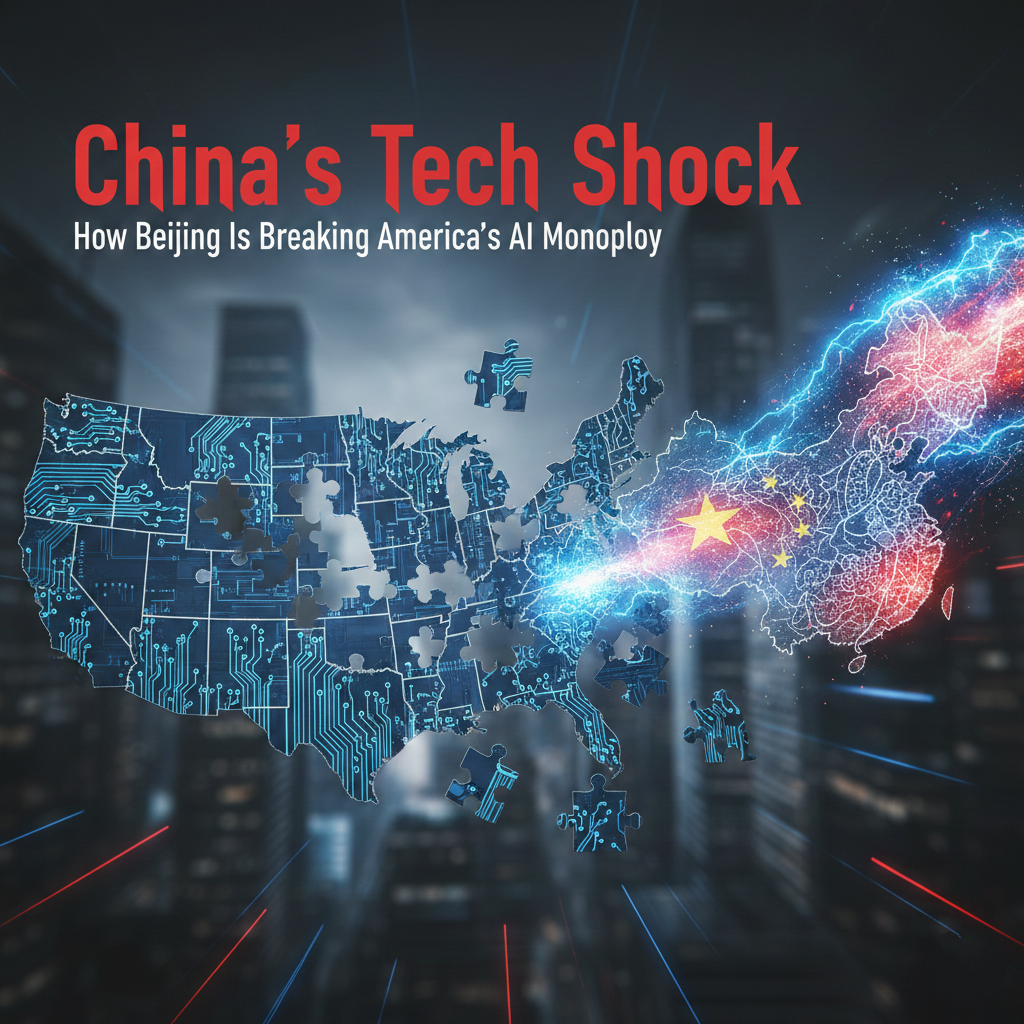
For decades, the United States has been the undisputed leader in artificial intelligence. But China’s rapid advances are shaking that monopoly. CNBC reports that this “tech shock” is only just beginning, and it could reshape the global AI landscape in ways few anticipated. Analysts warn this is not a short‑term disruption—it’s a structural shift in how technology will be developed, deployed, and controlled worldwide.
China’s Rapid Rise in AI
- China is no longer just a low‑cost manufacturer; it is emerging as a frontier innovator.
Homegrown Chips: Domestic semiconductors are powering advanced AI models. While not yet as powerful as Nvidia GPUs, they are sufficient for training large‑scale systems.
Huawei’s Role: Huawei has deployed massive chip clusters, supported by cheap energy and government subsidies, enabling China to scale AI training at competitive levels.
Large Language Models: China is investing heavily in generative AI, positioning itself as a rival to OpenAI and Google.
Value Chain Leap: Analysts note that China is “moving up the value chain very rapidly,” signaling a long‑term transformation.
U.S. Concerns and Challenges
- America’s dominance in AI is under pressure.
- Investment Pressure: The U.S. has poured over $700 billion into AI, but analysts question whether this spending will secure long‑term returns.
- Geopolitical Stakes: Losing the AI edge could weaken America’s influence in global tech standards and digital infrastructure.
- Monopoly at Risk: The idea of a single‑country monopoly on AI is fading as China accelerates innovation.
- Market Impact: Investors are debating whether AI output will become a commodity, compressing margins for U.S. Big Tech.
Global Implications
- The ripple effects of China’s rise extend far beyond AI.
- Within a decade, much of the world could be running on a Chinese tech stack, reshaping supply chains, cloud services, and digital ecosystems.
- Countries may face tough choices between U.S. and Chinese AI platforms, with implications for security, economics, and governance.
- Beyond AI, China’s rise extends into electric vehicles, semiconductors, and clean energy, marking the first time an emerging market economy is operating at the frontier of science and technology.
Conclusion
China’s tech shock is more than just a challenge to U.S. AI supremacy—it’s a signal that the global balance of power in technology is shifting. The next five to ten years will determine whether the world runs on American innovation or a Chinese‑built digital infrastructure. For businesses, policymakers, and investors, this is the moment to prepare for a multipolar tech future.
Reference
https://www.cnbc.com/2026/02/16/chinas-tech-shock-ai-monopoly-us.html