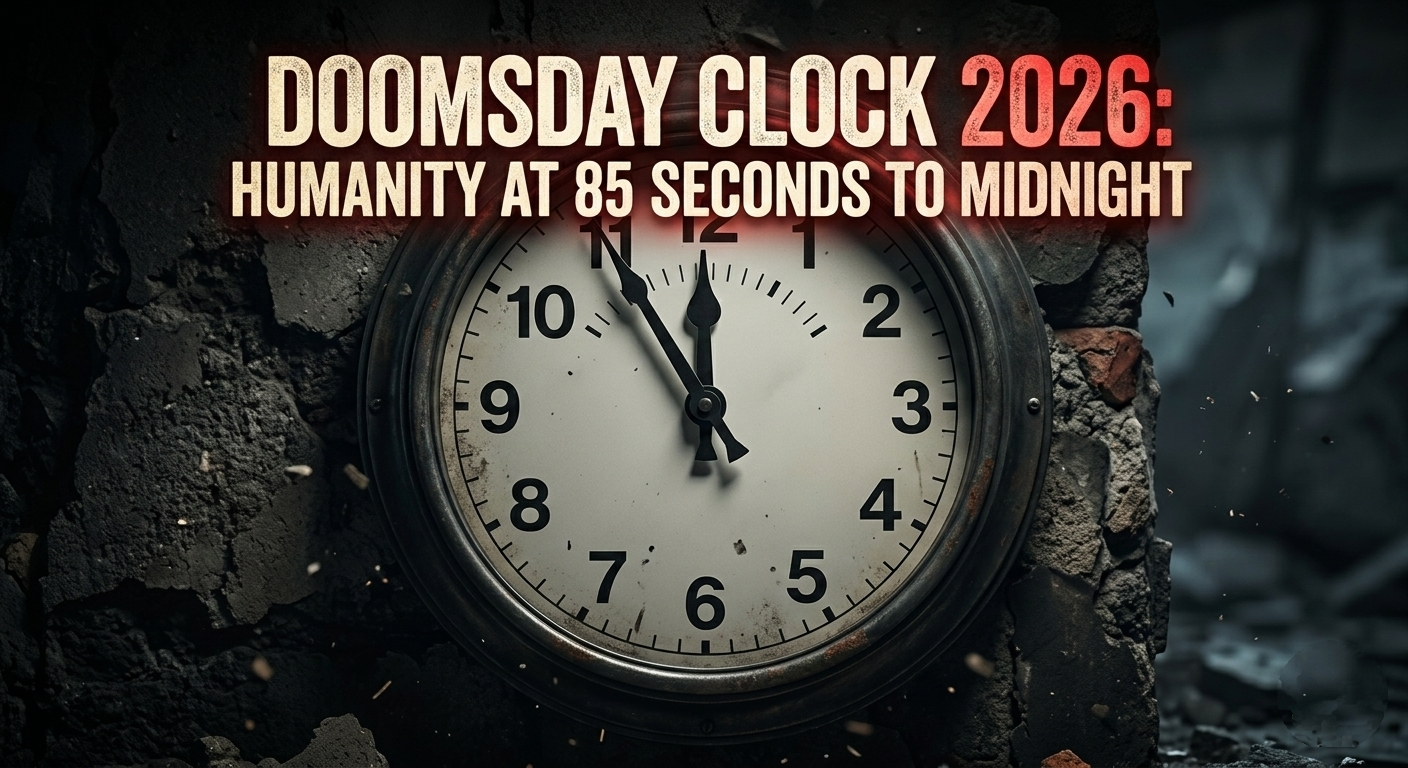
The Doomsday Clock, maintained by the Bulletin of the Atomic Scientists, is one of the most powerful symbols of human vulnerability. It doesn’t tick like a real clock—it warns. Midnight represents global catastrophe, and the seconds before midnight reflect how close humanity is to existential threats. In January 2026, the clock was set at 85 seconds to midnight, the closest in history. This chilling update is not just a scientific statement—it’s a wake-up call for every citizen of Earth.
Why the Clock Is Closer Than Ever
The Science and Security Board highlighted several compounding risks:
- Nuclear Weapons: With the expiration of the New START treaty, nuclear arsenals face fewer restrictions. Rising tensions between major powers amplify the danger of miscalculation.
- Climate Change: 2025 was the hottest year on record, with devastating floods, wildfires, and droughts. The lack of unified global action makes climate instability a persistent threat.
- Artificial Intelligence: Rapid AI development without international regulation raises concerns about autonomous weapons, misinformation campaigns, and destabilization of economies.
- Biosecurity: The pandemic era revealed vulnerabilities in global health systems. Emerging biological threats, whether natural or engineered, remain a serious risk.
Historical Context: From Cold War to Climate Crisis
- 1947: The clock debuted at 7 minutes to midnight, reflecting nuclear anxieties.
- 1962: During the Cuban Missile Crisis, nuclear war seemed imminent.
- 1991: After the Cold War, the clock was set back to 17 minutes—the safest point ever.
- 2018–2026: The clock steadily moved forward, reflecting nuclear tensions, climate inaction, and technological risks.
This timeline shows that the clock is not static—it responds to human choices.
Why It Matters to Us
The Doomsday Clock is not just about scientists moving hands on a dial—it’s about our collective responsibility. Every second closer to midnight is a reminder that decisions made by governments, corporations, and individuals shape the survival of humanity. It’s a call to action:
- Reduce nuclear stockpiles.
- Accelerate climate action.
- Regulate AI responsibly.
- Strengthen global cooperation.
What Can Be Done to Turn Back the Clock
- Diplomacy First: Renew nuclear treaties and foster dialogue between rival nations.
- Climate Commitments: Enforce stricter emission targets and invest in renewable energy.
- AI Governance: Establish international frameworks for safe AI development.
- Global Health Preparedness: Build resilient systems to detect and respond to biological threats.
The Role of Citizens and Communities
While governments and institutions hold the greatest power, ordinary people are not powerless.
- Advocacy: Citizens can pressure leaders to prioritize climate and disarmament policies.
- Education: Raising awareness about existential risks helps build a culture of responsibility.
- Lifestyle Choices: Reducing carbon footprints, supporting ethical tech, and promoting peace initiatives all contribute to turning back the clock.
Symbolism Beyond Science
The Doomsday Clock is more than a scientific tool—it’s a cultural icon. It has appeared in films, literature, and art as a metaphor for humanity’s fragility. Its power lies in simplicity: everyone understands the danger of midnight. That universality makes it one of the most effective communication tools in history.
Hope Amidst Alarm
Despite the grim symbolism, the clock is not meant to paralyze us with fear. It is designed to inspire hope through action. History shows that humanity can step back from the brink—whether through nuclear treaties, climate agreements, or technological safeguards. The clock reminds us that the future is not predetermined; it is shaped by choices we make today.
FAQ
Q1: Who sets the Doomsday Clock?
The Bulletin of the Atomic Scientists’ Science and Security Board, with input from Nobel laureates.
Q2: Is the Doomsday Clock a real clock?
No, it’s a symbolic representation of global threats.
Q3: Why is 85 seconds significant?
It marks the closest humanity has ever been to symbolic “midnight,” meaning unprecedented risk levels.
Q4: Can the clock be turned back?
Yes—through global cooperation, treaties, and decisive action on climate and technology.
Q5: Does the clock predict the future?
No, it’s a warning tool, not a prediction. It reflects current risks to inspire action.
Q6: How can individuals contribute?
By supporting sustainable policies, advocating for peace, and making responsible lifestyle choices.
🔔 Conclusion
Humanity Holds the KeyThe Doomsday Clock at 85 seconds to midnight is not a prophecy—it’s a warning. It reminds us that nuclear weapons, climate change, artificial intelligence, and biosecurity threats are not distant possibilities but urgent realities. Yet, history shows that humanity can step back from the brink. Treaties have been signed, emissions reduced, and crises averted when global cooperation prevailed.
The clock’s hands are moved by scientists, but its meaning is shaped by us all. Every choice—whether by governments, corporations, or individuals—pushes the hands forward or back. The message is clear: the future is not fixed, and midnight is not inevitable.
Reference
https://www.bing.com/search?q=%22https%3A%2F%2Fthebulletin.org%2Fdoomsday-clock%2F%22