
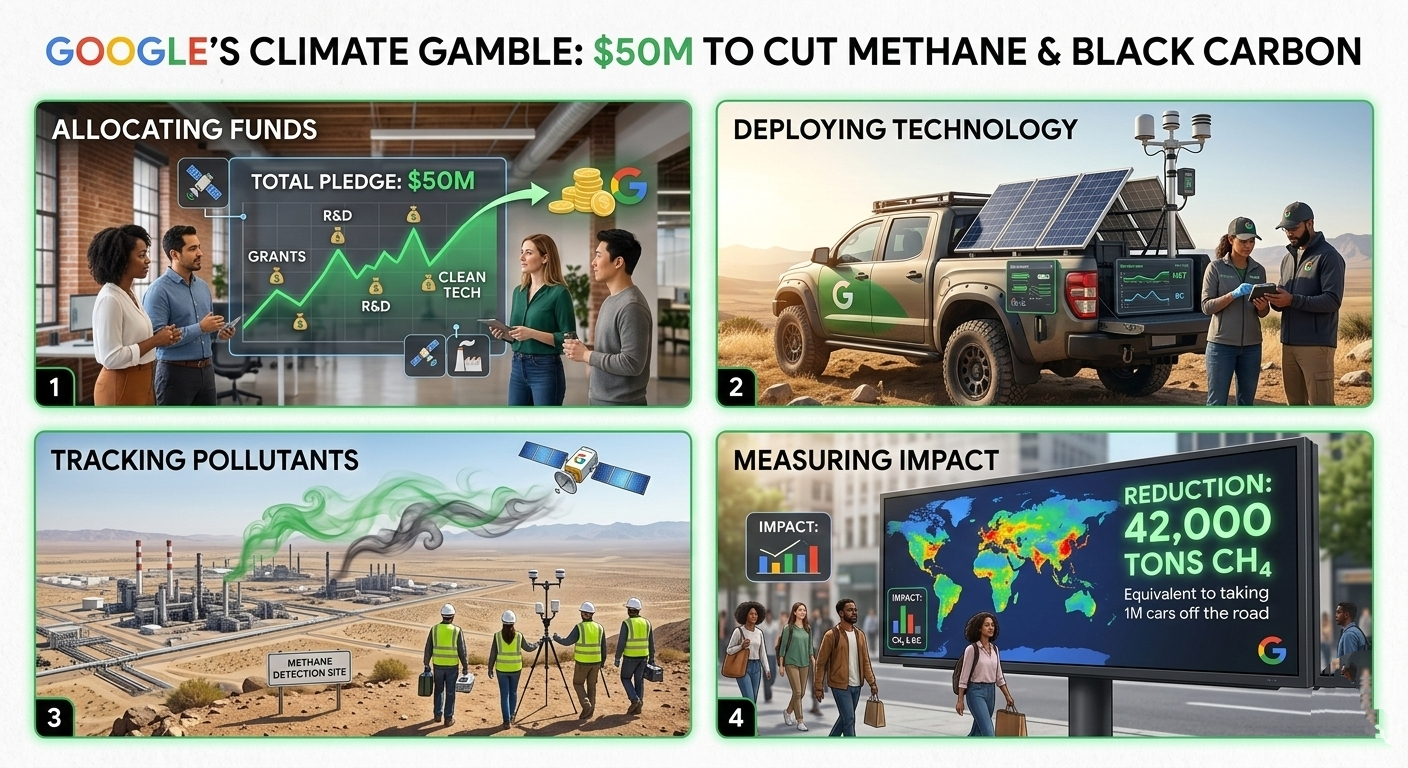
When tech giants talk about climate change, the world listens. Google’s latest pledge—three hours of its annual profit dedicated to fighting superpollutants—may sound symbolic, but it carries weight. In a world where every ton of methane or black carbon avoided buys us time, this initiative is more than corporate PR; it’s a step toward urgent climate action.
The Power of Superpollutants
Unlike carbon dioxide, which lingers for centuries, superpollutants are short-lived but devastating. Cutting them is like applying a fast brake on a speeding car—we feel the impact sooner. Google’s $50 million commitment, alongside Amazon and Salesforce, targets these pollutants directly, aiming to slash nearly half of the drivers of planetary warming.
Corporate Responsibility or Symbolism?
Critics may argue that three hours of profit is a drop in the ocean. Yet, framing the pledge this way makes climate action relatable. It forces us to ask: if three hours of profit can fund global projects, what could three hours of our own time or resources achieve?
The Bigger Picture
This coalition’s $100 million fund is not a silver bullet, but it signals a shift. Big Tech is increasingly aware that sustainability is not optional—it’s survival. For Google, whose data centers consume vast energy, investing in climate solutions is both responsibility and necessity.
FAQs
Q1: Why not focus on CO₂?
Because superpollutants deliver faster climate benefits when reduced.
Q2: Is $50 million enough?
Alone, no. But as part of a coalition, it sets precedent and momentum.
Q3: Who else is involved?
Amazon and Salesforce are co-founders of the initiative.
Conclusion
Google’s pledge is a reminder that climate action doesn’t always require decades—it can start with hours. If corporations can measure responsibility in profits, perhaps individuals can measure it in choices. The fight against climate change is not abstract; it’s urgent, immediate, and deeply human.
Reference