
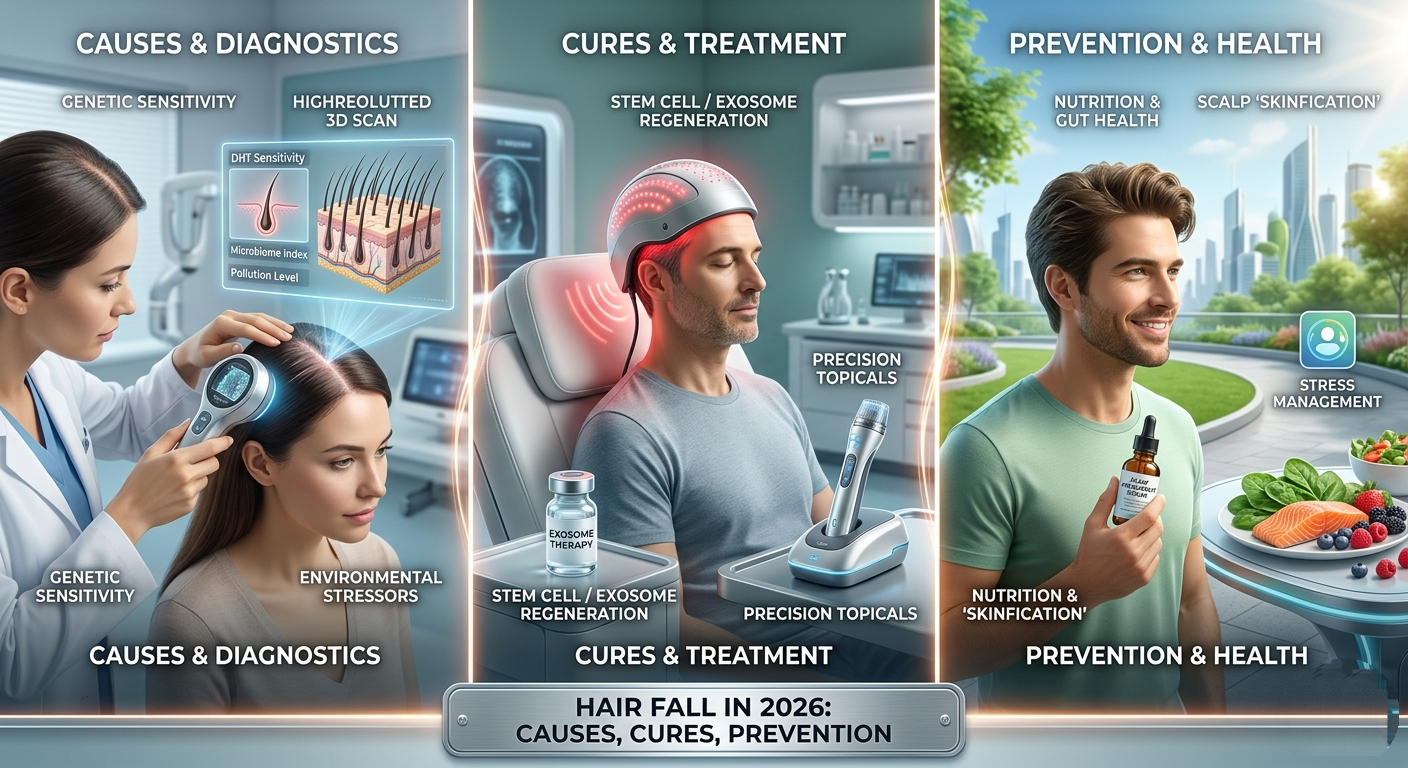
Hair is more than just a cosmetic feature—it’s tied to identity, confidence, and culture. Yet, hair fall (alopecia) affects millions worldwide, cutting across age, gender, and geography. In 2026, the conversation around hair fall has shifted from simple remedies to advanced medical therapies, lifestyle awareness, and holistic prevention. This blog explores the science, solutions, and strategies behind hair fall, helping readers make informed choices.
Understanding Hair Fall: The Science Behind Shedding
Hair grows in cycles—anagen (growth), catagen (transition), and telogen (resting). Shedding 50–100 hairs daily is normal, but excessive loss signals disruption.
Common Causes
- Genetics: Androgenetic alopecia (male/female pattern baldness).
- Hormonal changes: Thyroid disorders, PCOS, pregnancy, menopause.
- Medical conditions: Alopecia areata, chemotherapy, autoimmune diseases.
- Lifestyle factors: Stress, poor nutrition, sleep deprivation, smoking.
- Scalp health: Dandruff, fungal infections, or scarring alopecia.
Symptoms That Shouldn’t Be Ignored
- Gradual thinning on crown or hairline.
- Sudden patchy bald spots.
- Excessive shedding after combing/washing.
- Full-body hair loss linked to medical treatments.
Early detection is critical—what starts as mild thinning can progress to permanent loss if untreated.
Treatments in 2026: From Classic to Cutting-Edge
The treatment landscape has expanded dramatically. Here’s a breakdown:
| Treatment | Mechanism | Effectiveness | Notes |
|---|---|---|---|
| Minoxidil (topical/oral) | Stimulates follicles | High | Affordable, widely available |
| Finasteride (oral) | Blocks DHT hormone | High (men) | Limited use in women |
| JAK inhibitors | Target autoimmune pathways | Emerging | Effective for alopecia areata |
| Stem cell therapy | Regenerates follicles | Experimental | Clinical trials ongoing |
| Exosome therapy | Boosts follicle signaling | Promising | Still under study |
| PRP (Platelet-Rich Plasma) | Improves scalp circulation | Moderate | Best in early stages |
| Laser caps | Stimulates growth via light therapy | Moderate | Non-invasive option |
Lifestyle & Prevention Strategies
Medical treatments alone aren’t enough—prevention plays a huge role.
- Nutrition: Protein, iron, zinc, vitamin D, and biotin-rich foods.
- Stress management: Yoga, meditation, exercise.
- Hair care: Avoid harsh chemicals, tight hairstyles, and excessive heat.
- Medical check-ups: Rule out thyroid, anemia, or hormonal imbalances.
- Scalp hygiene: Regular cleansing, antifungal treatments if needed.
Storytelling Flow: A Real-Life Example
Consider Riya, a 32-year-old professional who noticed thinning hair during stressful work months. Initially dismissing it, she later discovered thyroid imbalance. With timely diagnosis, lifestyle changes, and topical minoxidil, she reversed much of the damage. Her story highlights the importance of early action and holistic care.
The Future of Hair Fall Solutions
By 2030, experts predict personalized genetic therapies and AI-driven scalp diagnostics will dominate. Imagine a handheld device scanning your scalp and prescribing tailored treatments instantly. The future is about precision medicine—not one-size-fits-all.
FAQ
Q1: Can hair fall be reversed?
Yes, if caught early. Permanent scarring alopecia, however, cannot be reversed.
Q2: Are natural remedies effective?
Some (like rosemary oil or scalp massage) may help circulation, but they are not substitutes for medical treatments.
Q3: Is hair fall more common in men or women?
Men face higher rates due to androgenetic alopecia, but women also experience significant loss linked to hormones and lifestyle.
Conclusion
Hair fall is more than a cosmetic issue—it’s a health signal. With modern science, lifestyle awareness, and preventive care, managing hair fall is more achievable than ever. The key lies in early detection, tailored treatment, and consistent care.
Reference
https://www.bing.com/search?q=%22https%3A%2F%2Fjamanetwork.com%2Fjournals%2Fjamadermatology%22