
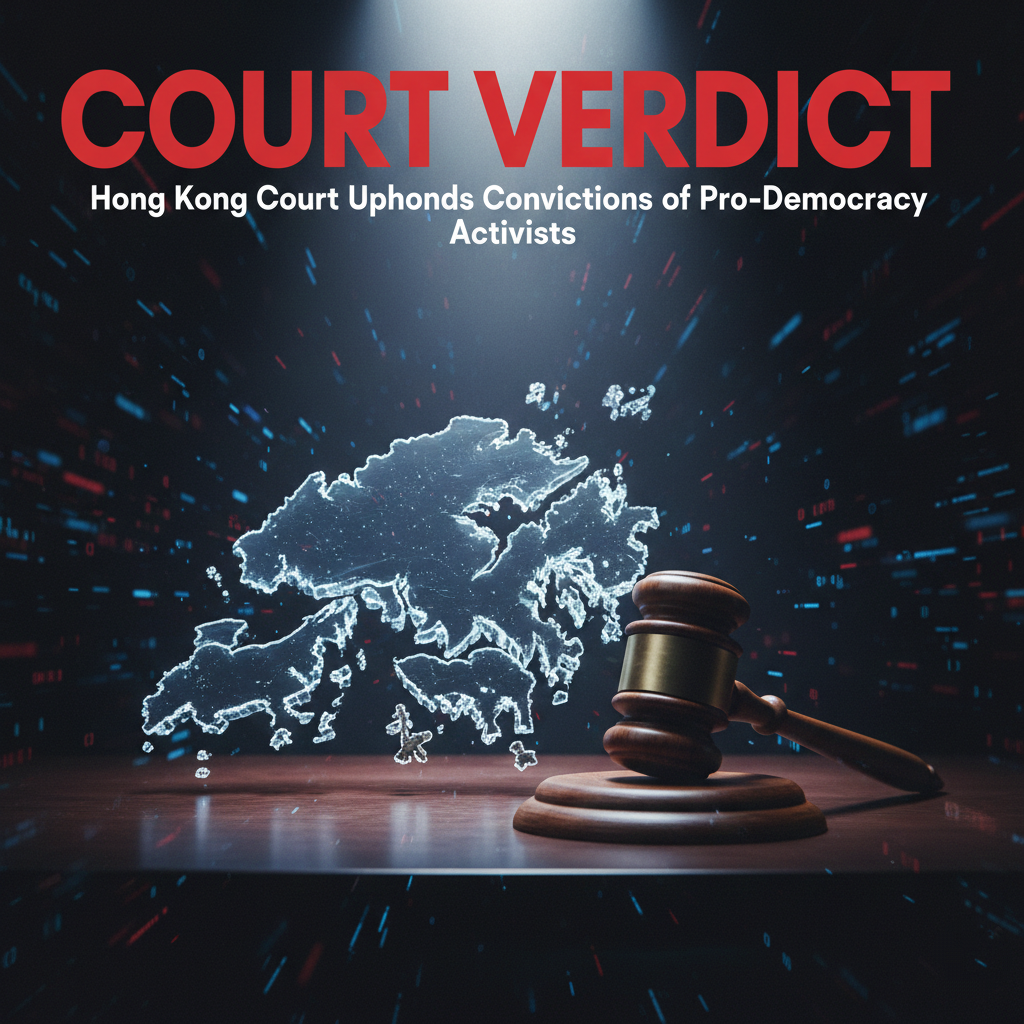
Hong Kong’s judiciary has once again reinforced Beijing’s national security law, upholding the convictions of 12 pro‑democracy activists in the landmark “Hong Kong 47” case. The ruling, delivered on February 23, 2026, has sparked global criticism and renewed concerns about the erosion of freedoms in the city. While authorities insist the law is vital for stability, critics argue it has silenced dissent and dismantled Hong Kong’s democratic movement.
Background of the ‘Hong Kong 47’ Case
- In 2021, 47 opposition figures were charged with conspiracy to commit subversion.
- Their alleged crime was organizing an unofficial primary election to maximize pro‑democracy candidates’ chances in the Legislative Council.
- The prosecution effectively dismantled Hong Kong’s pro‑democracy camp, which had been a major force during the 2019 protests.
The Court’s Decision
- On February 23, 2026, the Court of Appeal dismissed appeals from 12 activists.
- Sentences ranged from four years to 10 years.
- Judges ruled that the activists’ actions amounted to an attempt to undermine government authority.
- The verdict reinforced Beijing’s stance that political organizing outside official channels can be treated as subversion.
Reactions from Activists and Families
- Families expressed disappointment, calling the verdict politically motivated.
- Former lawmaker Leung Kwok‑hung (“Long Hair”) said the ruling shows Hong Kong’s freedoms are “gone for good.”
- Human rights groups condemned the decision, warning it criminalizes peaceful political activity.
Government and Beijing’s Position
- Authorities defended the ruling, stating that safeguarding national security is paramount.
- Beijing officials praised the court’s decision as proof that Hong Kong is “returning to stability.”
- The government emphasized that the law is not meant to silence dissent but to prevent destabilization.
Global Implications
- The ruling has drawn international attention:
- Western Governments: The U.S. and EU criticized the verdict, calling it a violation of Hong Kong’s autonomy under the “one country, two systems” framework.
- Human Rights Organizations: Amnesty International and Human Rights Watch warned that Hong Kong is sliding toward authoritarianism.
- Regional Impact: The case may discourage activism in neighboring regions, as Beijing signals its intolerance for organized opposition.
The Future of Hong Kong’s Democracy Movement
- With leading activists jailed, the pro‑democracy movement faces unprecedented challenges.
- Analysts suggest underground networks may emerge, but open political organizing is unlikely under current laws.
- The ruling may deter younger generations from activism, reshaping Hong Kong’s political culture for decades.
Conclusion
The “Hong Kong 47” case has become a defining moment in Hong Kong’s political trajectory. By upholding the convictions of 12 activists, the Court of Appeal reinforced Beijing’s grip on the city and signaled the diminishing space for dissent. While authorities claim stability is being restored, critics argue that Hong Kong’s democratic spirit has been irreversibly weakened. The world now watches to see whether Hong Kong adapts to this new reality or finds ways to reignite its struggle for freedom.
Reference
https://news.sky.com/story/convictions-of-pro-democracy-activists-upheld-in-hong-kong-13511108