
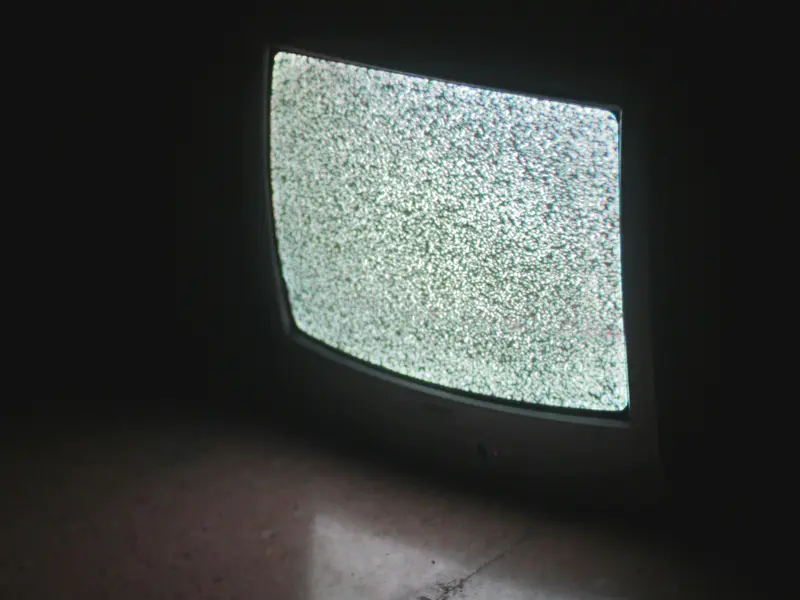
For decades, the snowy static on old televisions was dismissed as poor reception. But scientists have revealed something astonishing: that flickering noise contained traces of the Cosmic Microwave Background (CMB) — the afterglow of the Big Bang. Every time humans stared at a blank channel, they were unknowingly “time travelling” back 13.8 billion years to the universe’s birth.
What Is Cosmic Microwave Background (CMB)?
- Definition: The CMB is faint radiation left over from the Big Bang.
- Discovery: First detected in 1965 by Arno Penzias and Robert Wilson, who later won the Nobel Prize.
- Significance: It is one of the strongest pieces of evidence supporting the Big Bang theory.
Why CMB Matters
- Provides a snapshot of the early universe when it was only 380,000 years old.
- Helps scientists understand cosmic evolution, galaxy formation, and dark matter.
- Acts as a cosmic fingerprint, proving the universe had a hot, dense origin.
How TV Static Linked Us to the Big Bang
- 1% of Static = CMB: About 1% of the snowy static on analog TVs was actually radiation from the Big Bang.
- Everyday Encounter: Generations unknowingly connected with cosmic history through ordinary technology.
- Radio Hiss: The same phenomenon could be heard as faint hiss on radios.
The Human Connection: Time Travel Without Realizing
- Living Room to Cosmos: Watching static was like peeking into the universe’s earliest moments.
- Cultural Impact: What was once “noise” is now recognized as a direct link to creation.
- Scientific Wonder: It shows how everyday life can hold extraordinary secrets.
Historical Timeline of Discovery
- 1920s–1930s: Scientists predicted leftover radiation from the Big Bang.
- 1965: Penzias and Wilson accidentally discovered CMB while working on a radio antenna.
- 1978: They received the Nobel Prize in Physics.
- 2009–2013: ESA’s Planck mission mapped the CMB in unprecedented detail.
Modern Science and CMB
- NASA’s COBE & WMAP Missions: Provided detailed maps of CMB fluctuations.
- ESA’s Planck Satellite: Offered the most precise measurements of the universe’s age and composition.
- Future Research: Helps scientists explore dark energy, dark matter, and cosmic inflation
FAQs
Q1: What is the Cosmic Microwave Background?
It’s faint radiation left over from the Big Bang, filling the universe and detectable even today.
Q2: How did TV static show this?
About 1% of the static was actually CMB signals, appearing as white noise.
Q3: Can we still see it today?
Yes, though modern digital TVs reduce static, scientists detect CMB with advanced instruments.
Q4: Why is CMB important for science?
It provides evidence for the Big Bang and helps explain how galaxies and stars formed.
Q5: Did humans really time travel?
Not physically — but visually, they were witnessing radiation from the universe’s birth
Conclusion
The snowy flicker on old TV screens wasn’t meaningless. It was the universe’s origin story playing out in our living rooms. Humans unknowingly touched the birth of time itself — proving that even ordinary moments can hold cosmic wonder.
Reference
http://Humans unknowingly time travelled through universe’s birth in old TV static
https://www.esa.int/Science_Exploration/Space_Science/Planck