
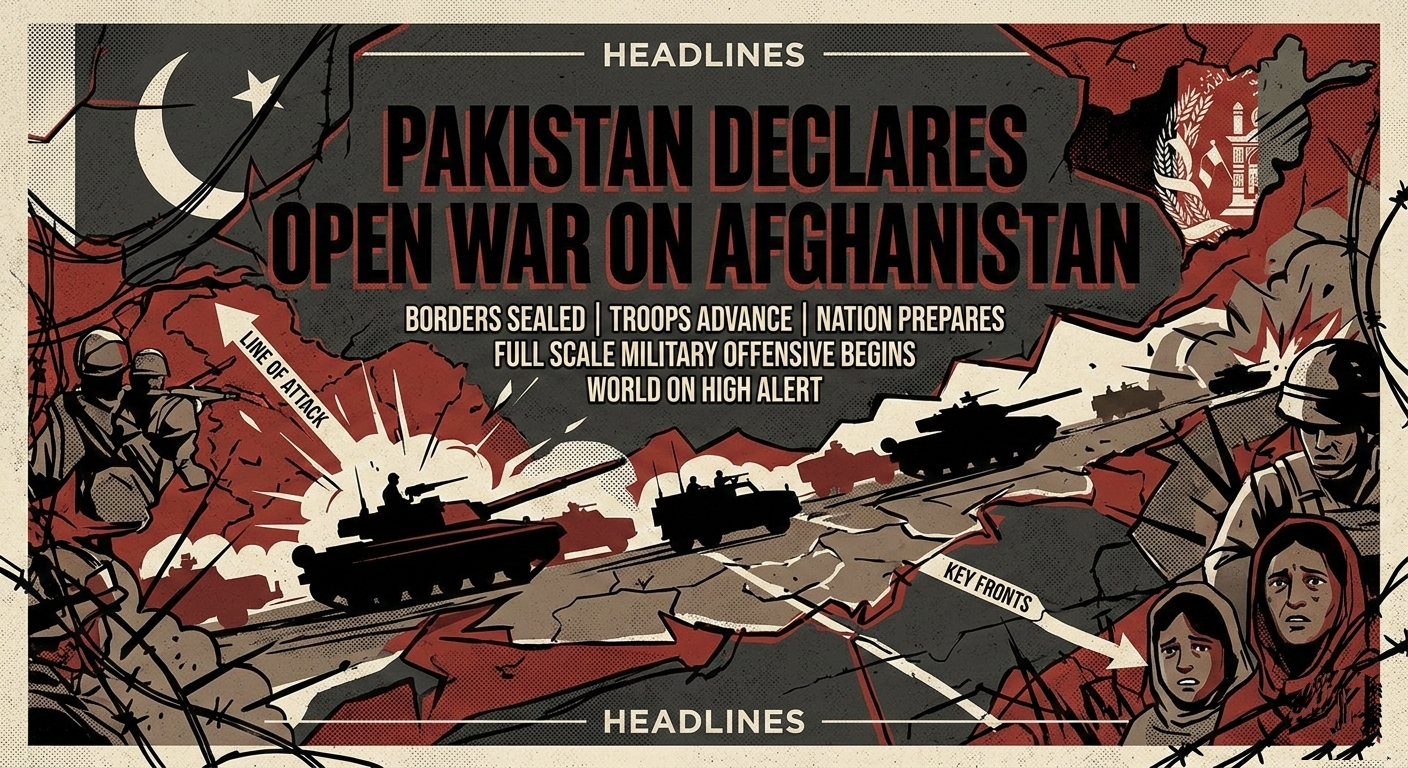
The morning of February 27, 2026, began with fear in Kabul. Residents woke to the sound of explosions as Pakistan launched airstrikes against Taliban positions. Within hours, Pakistan’s Defence Minister Khawaja Asif announced that the situation had reached the point of “open war.” For millions of Afghans and Pakistanis living along the border, this was not just a political statement — it was the start of a nightmare.
A Long Road of Tension
This war did not erupt overnight. For months, both nations had been locked in a dangerous cycle of accusations and retaliation. Pakistan accused the Taliban of harboring militants who carried out deadly attacks inside its territory. Afghanistan, in turn, accused Pakistan of violating its sovereignty with cross‑border strikes.
Diplomatic efforts in Doha and Turkiye offered brief hope, but mistrust ran too deep. By early 2026, clashes along the Durand Line intensified. The Taliban claimed to have killed dozens of Pakistani soldiers and captured border outposts. Pakistan rejected those claims, insisting it had inflicted heavy losses on Taliban fighters instead.
The Turning Point
When Kabul was bombed, everything changed. Pakistan’s Defence Minister declared: “Our cup of patience has overflowed. Now it is open war between us and you.” Those words carried the weight of finality. Prime Minister Shehbaz Sharif echoed the sentiment, promising “zero tolerance” for Taliban aggression.
For ordinary Afghans, the announcement meant more airstrikes, more uncertainty, and more fear. In Kandahar and Paktia, residents reported seeing plumes of smoke rising from military installations. In Bajaur, Pakistan, mortars struck villages, damaging mosques and homes.
Voices from the Region
Regional powers quickly reacted. Turkiye called both nations “brothers” and urged them to step back from the brink. Qatar engaged in urgent phone diplomacy, while the UK and US issued warnings about civilian safety. Yet for families huddled in basements in Kabul or fleeing border villages in Pakistan, these statements felt distant.One Afghan resident told reporters: “We have lived through war before, but this feels different. We don’t know if anyone will stop it this time.”
Why This Conflict Matters
This war is not just about two neighbors. It threatens to destabilize South Asia and beyond. Analysts warn that refugee flows could spill into Iran, Turkiye, and eventually Europe. Pakistan accuses the Taliban of acting as a proxy for India, raising fears of a wider regional confrontation.
The imbalance of power is also striking. Pakistan’s air force gives it a clear advantage, but the Taliban’s resilience and tribal networks make the conflict unpredictable. Neither side seems willing to back down.
FAQs
Q1: Why did Pakistan declare “open war”?
Because repeated Taliban attacks across the border escalated beyond Pakistan’s tolerance, leading to retaliatory strikes on Kabul and other Afghan cities.
Q2: Could this conflict spread beyond Afghanistan and Pakistan?
Yes. Refugee flows and regional rivalries could drag Iran, Turkiye, and even India into the crisis.
Q3: What role are global powers playing?
Turkiye and Qatar are mediating, while the US and UK are urging restraint. But so far, no ceasefire has been achieved.
Conclusion
The declaration of “open war” between Pakistan and Afghanistan is more than a headline. It is a human tragedy unfolding in real time. Families are being displaced, children are growing up under the shadow of bombs, and two nations with deep cultural ties are tearing each other apart.The world is watching, but for those living through the violence, the question is simple: When will the bombs stop?
Reference