
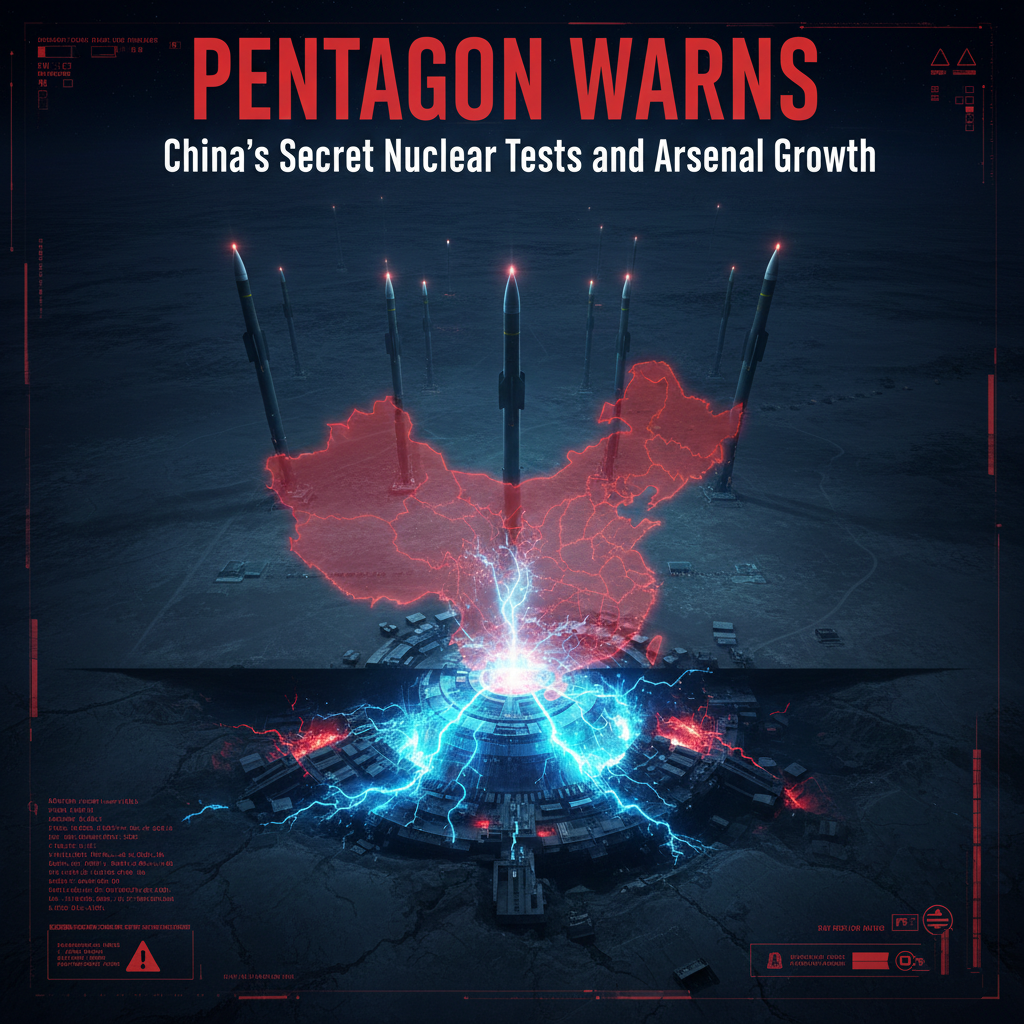
The United States has raised alarm over China’s rapid expansion of its nuclear arsenal, warning that Beijing’s actions could destabilize global security. According to the Pentagon, China has not only increased the number of nuclear warheads but is also conducting secretive nuclear tests. This development comes at a time when the New START treaty between the U.S. and Russia has expired, leaving the world’s major powers without a binding arms control agreement.
China’s Nuclear Expansion
- Pentagon reports claim China has significantly increased its nuclear stockpile.
- Construction of new missile silos and modernization of delivery systems are underway.
- Allegations of low-yield nuclear tests raise concerns about treaty violations.
US Response and Arms Control Push
- Washington is pressing for a new trilateral arms control framework.
- Transparency and verification mechanisms are emphasized to avoid miscalculations.
- Officials argue that without China’s participation, treaties will remain incomplete.
Global Security Implications
- Expansion raises fears of a new nuclear arms race in Asia.
- Regional powers like India, Japan, and South Korea are closely monitoring.
- Analysts warn of risks to decades of arms reduction progress.
China’s Position and Counterarguments
- Beijing maintains a “minimum deterrence” policy, claiming its arsenal is smaller.
- Chinese officials accuse Washington of exaggerating the threat.
- China insists it will not join talks unless U.S. and Russia reduce their larger stockpiles.
Future of Nuclear Diplomacy
- The collapse of treaties leaves the world at a critical crossroads.
- Dialogue among major powers is essential to prevent escalation.
- The next few years will determine whether cooperation or confrontation dominates nuclear policy.
Conclusion
The U.S. accusation against China underscores the fragile state of global nuclear stability. With treaties collapsing and geopolitical tensions rising, the risk of miscalculation grows. Transparent dialogue and arms control commitments are urgently needed to safeguard global peace.
Reference