
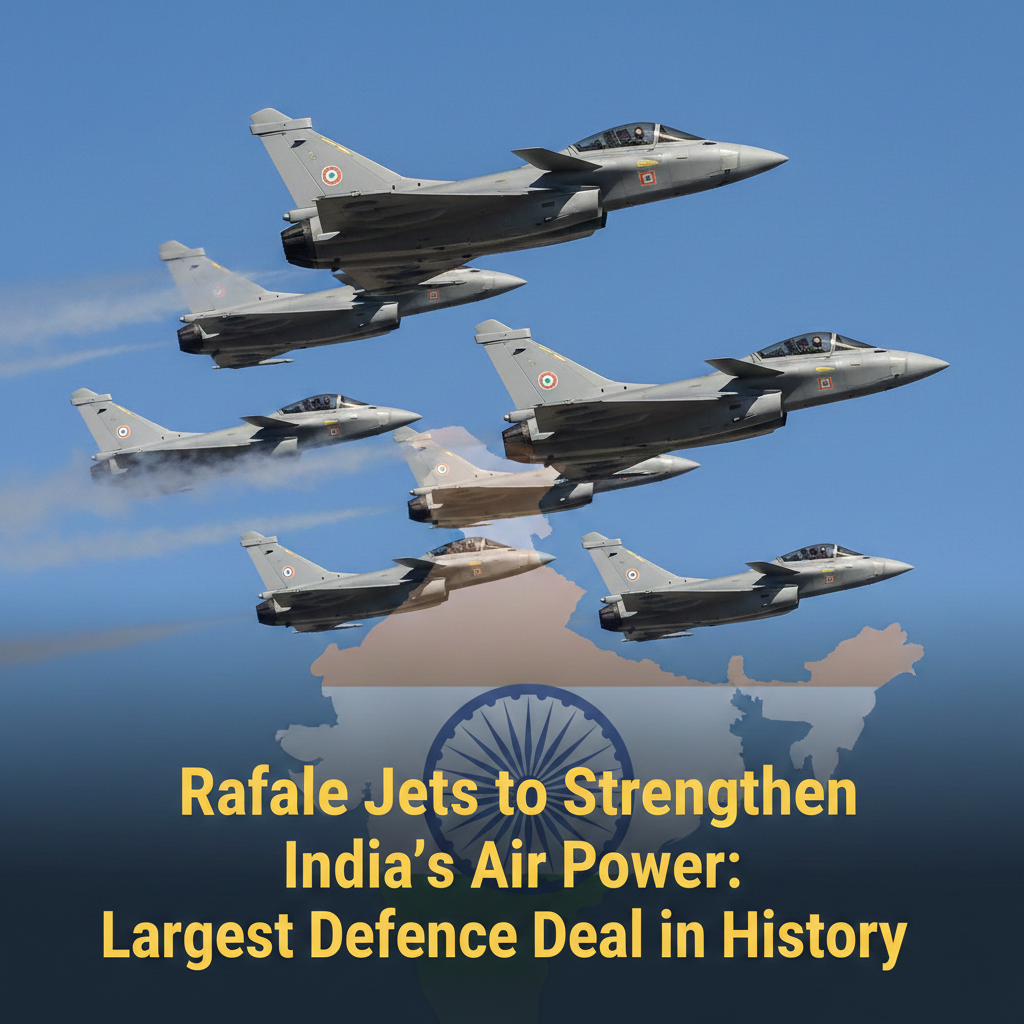
French President Emmanuel Macron’s latest visit to India has brought global attention to a potential $35bn defence agreement. The deal, involving the purchase of 114 Rafale fighter jets, would mark India’s largest-ever defence acquisition and the biggest export order for Dassault Aviation. While negotiations continue, the visit underscores the growing strategic partnership between India and France.
Macron’s Visit and Strategic Agenda
- Macron arrived in Mumbai with First Lady Brigitte Macron, accompanied by top business executives.
- He is scheduled to meet Prime Minister Narendra Modi and attend a global AI summit in New Delhi.
- Modi emphasized strengthening bilateral ties, highlighting cooperation across defence, technology, and trade.
The Rafale Deal: A Game-Changer for India
- India’s defence ministry has already cleared the purchase, but final cabinet approval is pending.
- The deal would nearly equal the number of Rafales currently in service with the French armed forces.
- India’s air force operates fewer than 30 fighter squadrons, far below its target of 42.
- The Rafales are expected to form the backbone of India’s combat potential in the 2030s and 2040s.
Industrial Collaboration and “Make in India” Push
- Dassault Aviation is expected to assemble a significant portion of the jets in India.
- Engine maker Safran has opened the possibility of manufacturing Rafale motors domestically.
- This aligns with India’s ambition to build a robust defence manufacturing ecosystem.
Geopolitical Context
- Europe is seeking to revitalize its arms industry amid uncertainty in transatlantic alliances.
- India, the world’s largest arms importer, is urgently modernizing its fleet after regional tensions with Pakistan.
- Both nations emphasize strategic autonomy and multilateralism, avoiding reliance on a single global power.
Historical Background
- India selected the Rafale over the Eurofighter Typhoon in 2012.
- Political indecision delayed the deal for over a decade.
- India previously purchased 36 Rafales in 2016 and 26 for its navy in 2024.
Conclusion
The Rafale deal represents more than just a defence purchase — it is a strategic milestone in India–France relations. With industrial collaboration, geopolitical alignment, and long-term military modernization, the agreement could reshape India’s air power and cement France’s role as a key partner in India’s aerospace ecosystem.
Reference
https://www.ft.com/content/7e02fbc4-11db-4407-8fbd-a18f9cf9871b