
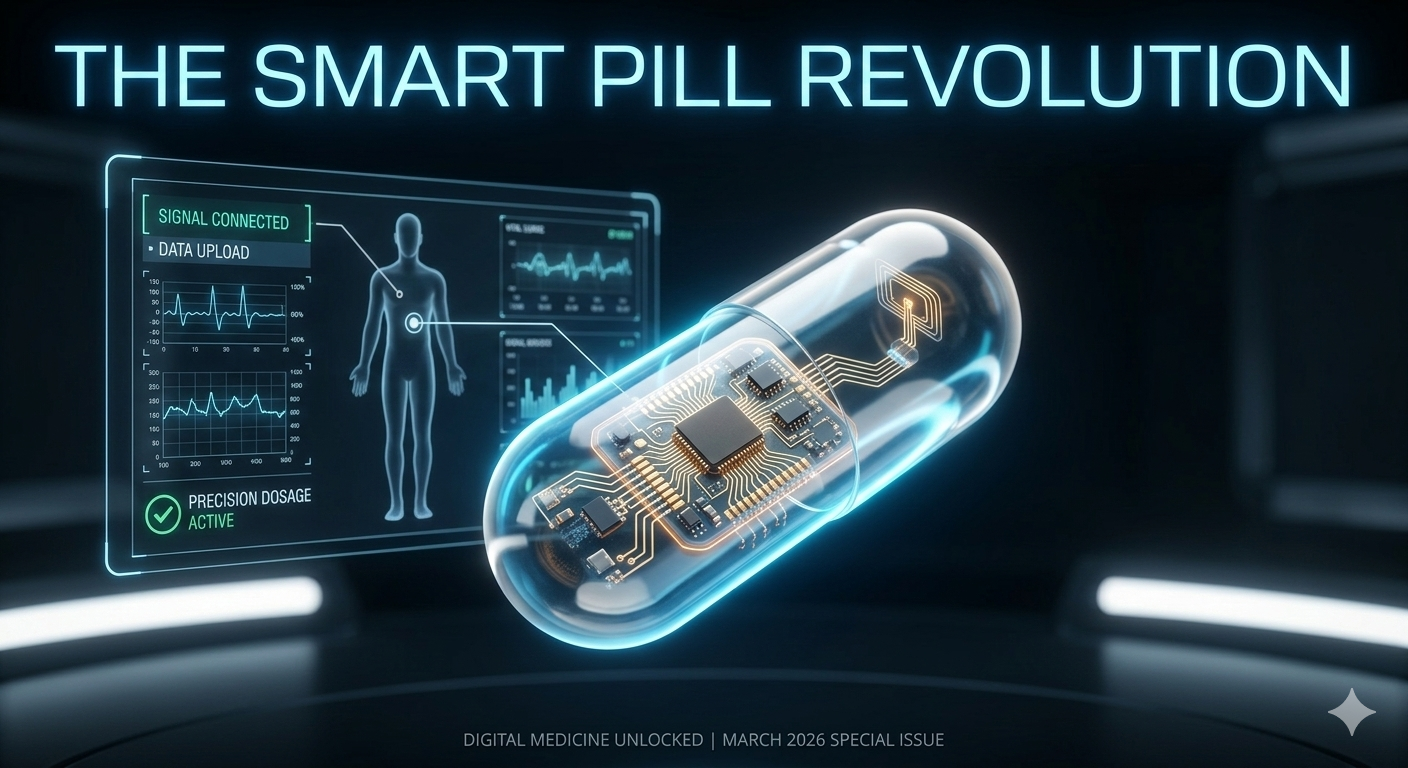
Imagine swallowing a pill that doesn’t just dissolve—it diagnoses, delivers medicine, and even takes biopsies while inside your body. This is the promise of ingestible electronics, a rapidly evolving field at the intersection of biomedical engineering, microelectronics, and personalized healthcare. These capsule-sized devices are poised to transform how we monitor and treat gastrointestinal (GI) conditions, offering a non-invasive alternative to endoscopy and systemic drug delivery.
From Early Capsules to Smart Pills
- 1950s beginnings: The first swallowable devices measured simple parameters like temperature and pH.
- 2000s breakthrough: The PillCam introduced video capsule endoscopy, revolutionizing GI diagnostics.
- Today’s frontier: Autonomous capsules equipped with sensors, actuators, and wireless communication modules capable of real-time decision-making inside the gut.
🔬 Cutting-Edge Innovations
| Function | Technology | Benefits |
|---|---|---|
| Sensing | Bioimpedance, gas detection, neurotransmitter monitoring | Detects inflammation, microbiome changes, early cancer signs |
| Drug Delivery | Microneedles + actuators for localized release | Reduces side effects, increases drug effectiveness |
| Biopsy | Spring-loaded micro-cutting tools | Enables minimally invasive tissue sampling |
⚙️ Engineering Challenges
- Power Supply: Coin-cell batteries consume 30–50% of capsule volume. Alternatives include gastric-fluid-powered batteries and microbial fuel cells.
- Biocompatibility: Devices must resist stomach acid and enzymes without degrading.
- Miniaturization: Integrating sensors, actuators, and wireless systems into pill-sized capsules.
- Safety: Preventing capsule retention and ensuring wireless signals are harmless.
Clinical Applications
- Diagnostics: Detecting tumors, inflammation, and bacterial overgrowth.
- Therapy: Targeted drug delivery for conditions like Crohn’s disease and ulcerative colitis.
- Screening: Routine, at-home cancer checks for high-risk patients.
- Biopsy: Affordable, frequent tissue sampling without sedation or hospital visits.
⚠️ Risks & Limitations
- Capsule retention leading to bowel obstruction.
- Sensor reliability in the gut’s corrosive environment.
- Regulatory hurdles: proving safety and effectiveness to physicians and patients.
Future Outlook
- Short Term: Screening capsules for GI cancers and inflammatory diseases.
- Medium Term: Multimodal capsules combining sensing, drug delivery, and biopsy.
- Long Term: Semi-autonomous capsules capable of diagnosing, treating, and analyzing samples in real time.
FAQ
Q1: Are ingestible capsules safe?
Yes, they use biocompatible materials and low-power electronics, but clinical trials are ongoing.
Q2: When will they be widely available?
Diagnostic capsules are already in use; advanced autonomous capsules are expected within the next decade.
Q3: Can they replace endoscopy?
Not entirely yet, but they can complement or reduce the need for invasive procedures.
Conclusion
Ingestible electronics are not just futuristic—they are already reshaping medicine. By merging engineering precision with biomedical innovation, these smart pills promise a world where gut health can be monitored and treated at home, reducing reliance on invasive procedures and expanding access to care.
Reference