
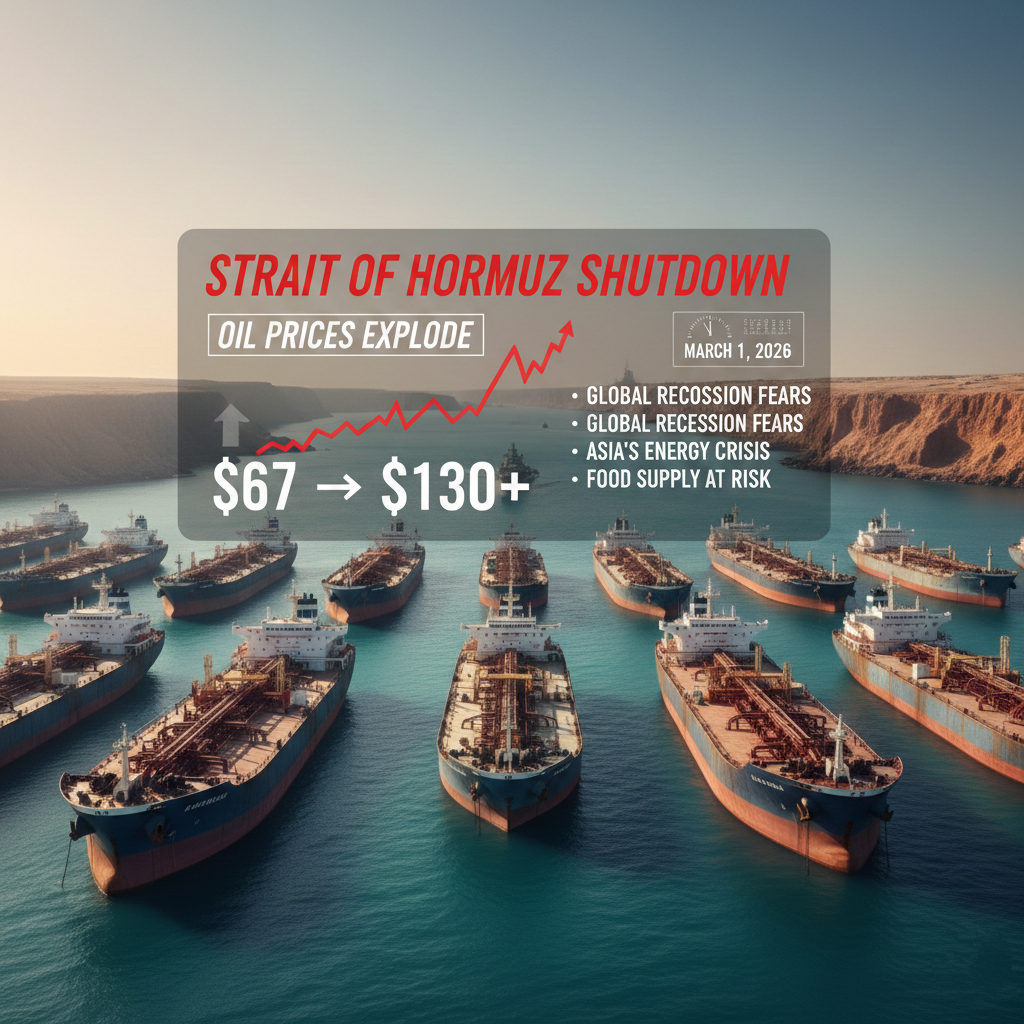
Imagine a narrow stretch of water, just 21 miles wide, carrying nearly one‑fifth of the world’s oil. That’s the Strait of Hormuz — a lifeline for global energy. Now picture it suddenly blocked. Tankers stranded. Markets panicking. Families wondering why fuel prices at the pump just doubled overnight.This isn’t just a geopolitical headline; it’s a scenario that could touch everyday lives across continents. Experts are weighing in on what such a closure could mean, and the possibilities range from short‑term turbulence to a full‑blown energy shock.
The First Shockwave – Markets React Instantly
When uncertainty strikes, markets don’t wait. Traders would immediately price in risk, pushing oil futures higher. Think of it like a sudden storm at sea — even if the skies clear quickly, the waves take time to settle.
- Oil could surge past $100 per barrel.
- Insurance premiums for tankers would skyrocket.
- Countries dependent on Gulf oil might scramble to secure emergency supplies.
Short‑Term Closure – A Test of Resilience
If the Strait were closed for days, reserves would cushion the blow. The U.S., China, and Europe all maintain strategic petroleum reserves for moments like this. But even with those buffers, ripple effects would be felt:
- Shipping delays would disrupt supply chains.
- Airlines and transport companies would face rising costs.
- Consumers would notice higher fuel prices almost immediately.
Prolonged Closure – Echoes of the 1970s Energy Crisis
A closure lasting weeks or months would be a different story. Economies could feel the squeeze in ways reminiscent of the oil shocks of the 1970s.
- Inflation would climb as energy costs seep into food, manufacturing, and logistics.
- Developing nations with limited reserves would struggle the most.
- Global growth forecasts could be slashed, with recession risks looming.
Worst‑Case Scenario – Conflict Beyond Oil
Experts warn that if closure coincides with regional conflict, the crisis could deepen. Imagine oil facilities under attack or shipping lanes militarized. In that case:
- Gas markets would also be destabilized.
- Energy security would dominate global policy discussions.
- Nations might accelerate their push toward renewables, nuclear, and hydrogen as a survival strategy.
Searching for Alternatives – Can the World Adapt?
The world isn’t entirely helpless. Pipelines in Saudi Arabia and the UAE bypass Hormuz, though they can’t carry the full load. Meanwhile, the crisis could act as a catalyst:
- Renewables and nuclear energy projects could gain urgency.
LNG infrastructure might expand faster.
Hydrogen could move from futuristic concept to mainstream investment.
FAQs
Q1: Why does the Strait of Hormuz matter so much?
Because nearly 20–30% of global oil and gas supplies pass through it, making it the single most strategic chokepoint for energy.
Q2: Could oil prices really hit $100+?
Yes. Analysts believe prolonged closure could push prices into triple digits, similar to past energy shocks.
Q3: What can countries do to prepare?
Diversify energy sources, build reserves, and invest in alternative transport routes and renewables.
Conclusion
The Strait of Hormuz isn’t just a narrow waterway — it’s the artery of global energy. A closure would ripple far beyond oil markets, touching households, businesses, and governments worldwide. Whether the disruption lasts days or months, the lesson is clear: resilience and diversification are no longer optional. They’re essential.
Reference