
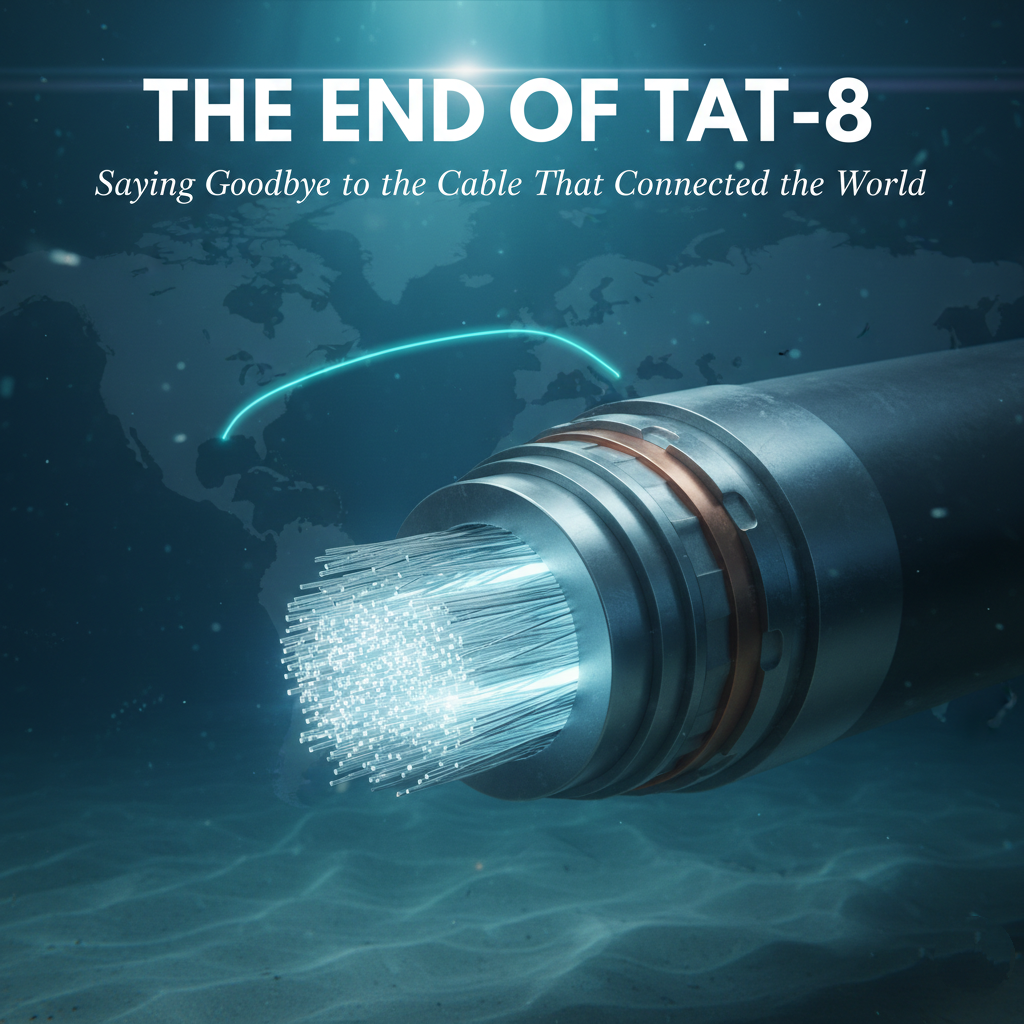
The internet as we know it today owes much of its existence to a single piece of infrastructure buried deep beneath the Atlantic Ocean: the TAT‑8 undersea cable. Installed in 1988, this pioneering fiber‑optic cable carried the bulk of intercontinental internet traffic for decades, laying the foundation for the digital age. Now, after years of service, TAT‑8 has been officially decommissioned. Its retirement marks the end of an era and invites reflection on how undersea cables continue to shape global communication.
The Birth of TAT‑8: A Technological Revolution
- First fiber‑optic transatlantic cable: TAT‑8 replaced copper cables, enabling faster, more reliable data transmission.
- Capacity breakthrough: It could carry 40,000 simultaneous telephone calls, a massive leap compared to earlier systems.
- Global impact: By the early 1990s, TAT‑8 was responsible for almost all intercontinental internet traffic, powering the rise of email, early websites, and global connectivity.
Myths and Realities of Undersea Cables
- Shark attacks myth: Popular culture often claimed sharks were the biggest threat to cables. In reality, human activity—such as fishing, anchoring, and dredging—posed far greater risks.
- Maintenance challenges: Specialized ships and crews were required to monitor, repair, and eventually recover cables from the ocean floor.
- Environmental considerations: Decommissioning involves recycling materials and minimizing ecological disruption.
The Human Effort Behind the Global Internet
- Teams of engineers, divers, and ship crews worked tirelessly to install and maintain TAT‑8.
- Recovery operations highlight the complexity of retrieving cables from depths of thousands of meters.
- The retirement process reflects decades of human ingenuity and dedication to keeping the world connected.
Evolution Beyond TAT‑8
- Modern fiber‑optic systems: Today’s cables transmit terabits of data per second,
- supporting streaming, cloud computing, and AI applications.
- Global scale: More than 400 active submarine cables now carry over 95% of international internet traffic.
- Strategic importance: Undersea cables are not just technical infrastructure—they are geopolitical assets, influencing trade, security, and digital sovereignty.
Why TAT‑8 Still Matters
- It symbolizes the transition from analog to digital communication.
- It reminds us that the internet is not “wireless magic” but a physical network of cables spanning oceans.
- Its retirement underscores the need to continually invest in resilient, scalable infrastructure for the future.
Conclusion
The decommissioning of TAT‑8 is more than the end of a cable—it is the closing chapter of the internet’s formative years. From enabling the first wave of global connectivity to inspiring today’s massive fiber‑optic networks, TAT‑8’s legacy lives on. As new projects like Meta’s Waterworth cable promise to extend connectivity across continents, the story of TAT‑8 reminds us that the internet’s backbone lies beneath the sea, quietly powering our digital lives.
Reference
https://digg.com/technology/bifCjGB/say-goodbye-to-the-undersea-cable
https://www.wired.com/story/meta-undersea-cables-internet-connectivity-india/