
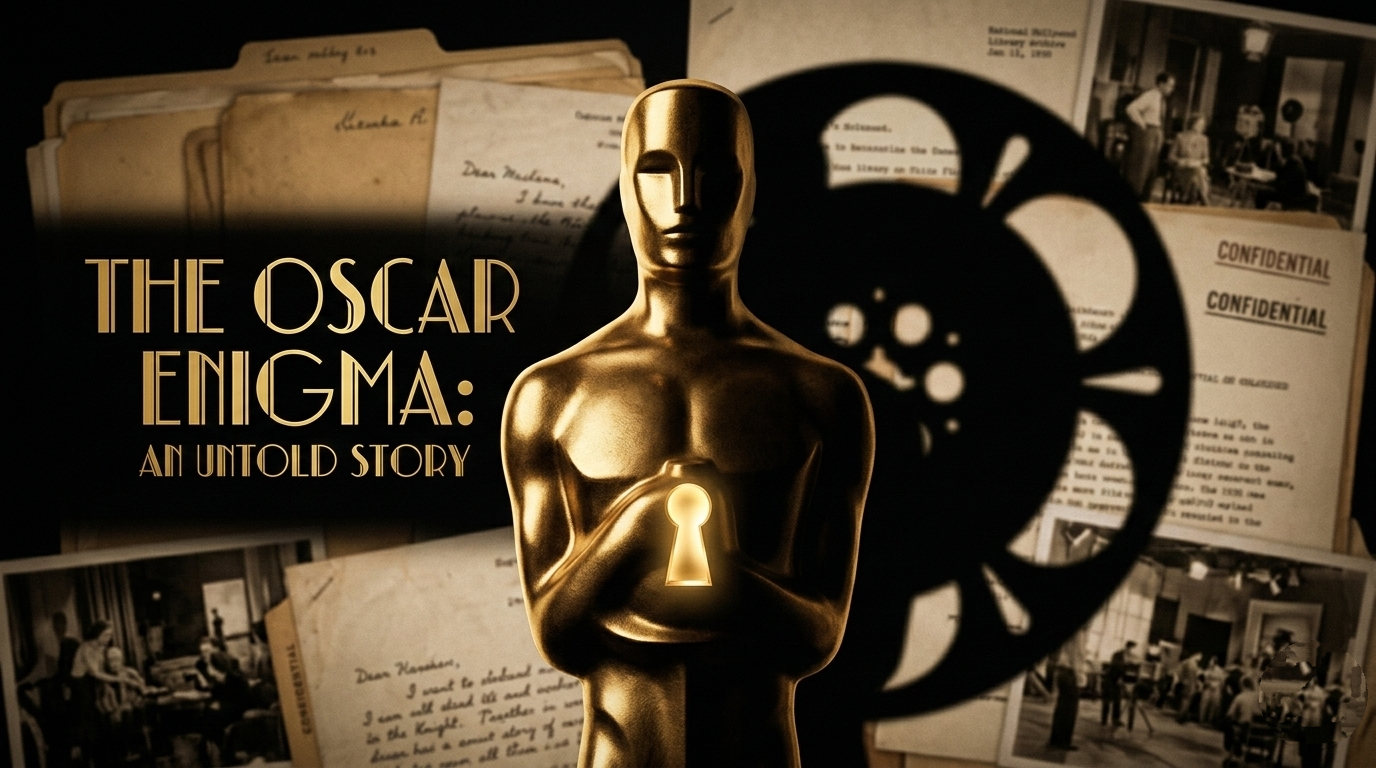
Every March, the world tunes in to Hollywood’s biggest night—the Academy Awards. The ceremony celebrates cinematic excellence, but one question often arises: why are they called the “Oscars”? The answer is a fascinating blend of myth, media influence, and cultural adoption. Let’s dive into the story behind one of the most iconic nicknames in entertainment history.
The Official Name vs. The Nickname
- The golden statuette is officially titled the Academy Award of Merit.
- Standing 13.5 inches tall and weighing 8.5 pounds, it depicts a knight holding a sword atop a film reel.
- Yet, despite its formal name, the world knows it simply as the Oscar.
This dual identity reflects Hollywood’s mix of tradition and informality—prestige wrapped in accessibility.
Margaret Herrick’s “Uncle Oscar” Theory
In the 1930s, Margaret Herrick, then a librarian at the Academy, saw the statuette and remarked that it resembled her Uncle Oscar.
- Staff members began informally calling it “Oscar.”
- Herrick later became the Academy’s executive director, cementing her influence.
- This anecdote is widely considered the most credible origin story.
It’s a reminder that even global traditions can start with a casual remark.
Sidney Skolsky’s Satirical Spin
Another theory credits Sidney Skolsky, a Hollywood columnist known for his sharp wit.
- At the 1934 ceremony, he covered Katharine Hepburn’s first Best Actress win.
- Finding the event pompous, he used “Oscar” in his column to deflate its self-importance.
- Some suggest he borrowed the name from Oscar Hammerstein, a theatre owner.
Skolsky’s playful jab resonated with readers, spreading the nickname beyond Hollywood insiders.
Media Adoption and Cultural Resonance
Once newspapers and magazines picked up the term, “Oscar” became unstoppable.
- Catchy and informal: Easier to say than “Academy Award of Merit.”
- Universal appeal: The nickname humanized the ceremony, making it relatable.
- Endorsed by the Academy: Eventually, even official communications embraced “Oscar.”
Today, the phrase “And the Oscar goes to…” is as iconic as the films themselves.
🎬 The Oscars Today
The Academy Awards remain the pinnacle of cinematic achievement.
- The 2026 ceremony will take place on 15 March at the Dolby Theatre in Los Angeles.
- Broadcast live on ABC and streamed on Hulu.
- Despite its formal title, the nickname “Oscar” dominates headlines, social media, and everyday conversation.
The nickname has transcended its origins to become a global brand.
Storytelling Reflection
The tale of the Oscars’ name is more than trivia—it’s a lesson in how culture evolves.
- A librarian’s offhand remark.
- A columnist’s satirical jab.
- The media’s amplification.
Together, they transformed a formal award into a household name. It shows how language, humor, and human connection shape traditions that endure for generations.
FAQ
Q1: Is “Oscar” the official name?
No, the official name is Academy Award of Merit, but “Oscar” is universally used.
Q2: When did the nickname first appear in print?
In 1934, in Sidney Skolsky’s column about Katharine Hepburn.
Q3: Does the Academy endorse the nickname?
Yes, the Academy itself now uses “Oscar” in official communications.
Conclusion
The Academy Award of Merit may be the official title, but “Oscar” is the name that captured the world’s imagination. Whether born from affection or satire, the nickname reflects Hollywood’s blend of glamour and relatability. Next time you hear “And the Oscar goes to…,” remember—it’s more than a phrase; it’s history in motion.
Reference
https://www.indy100.com/viral/academy-awards-oscars-explained