
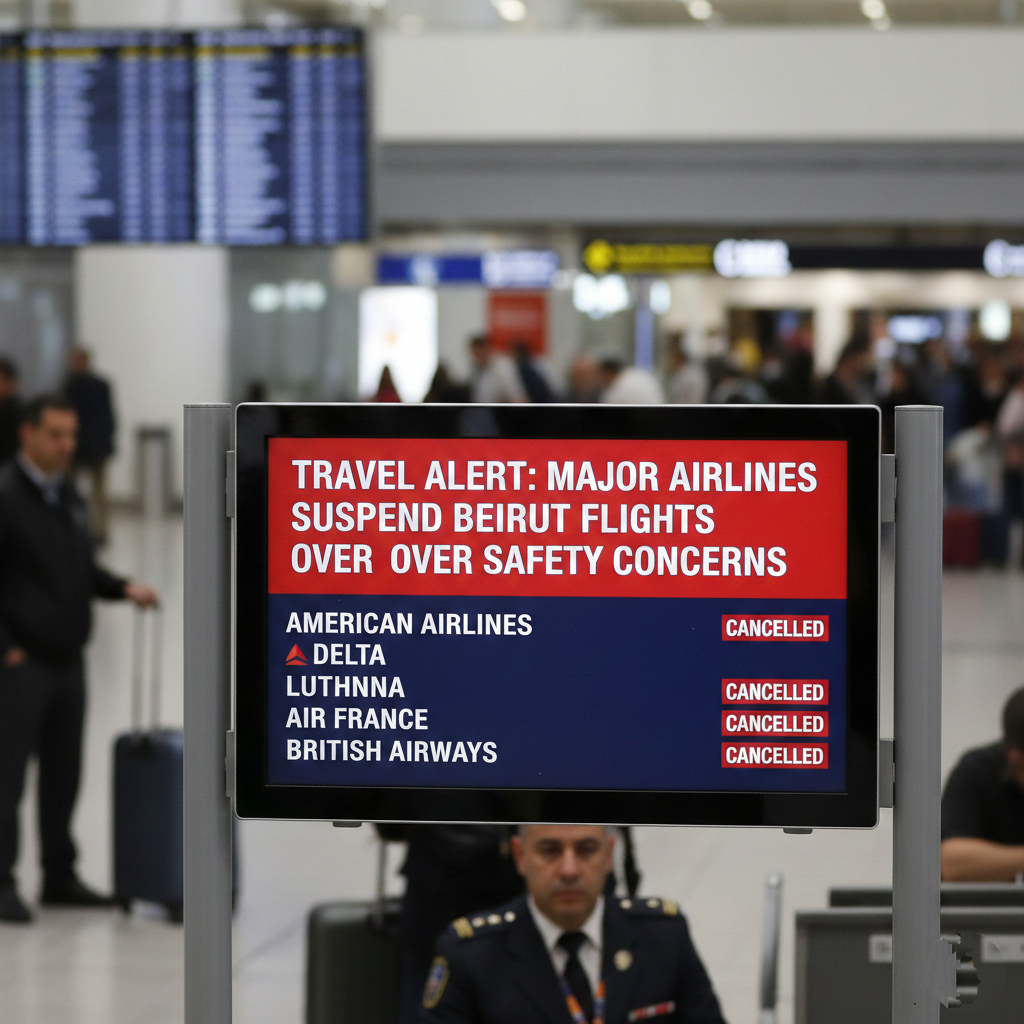
The Middle East is once again facing turbulence — not just politically, but in the skies. Major international airlines, including Germany’s Lufthansa, Swiss International Air Lines, Eurowings, and Turkish Airlines, have suspended flights to Beirut. The decision comes amid escalating tensions between Israel and Hezbollah, raising fears of wider instability in Lebanon and beyond. For travelers, businesses, and policymakers, these cancellations highlight the fragile balance between aviation safety and geopolitical conflict.
Why Airlines Are Cancelling Flights
- Precautionary Measures: Lufthansa announced that suspensions were made “in an abundance of caution.”
- Insurance Risks: Lebanon’s Middle East Airlines (MEA) postponed flights citing insurance concerns.
- Regional Escalation: The cancellations follow a deadly rocket strike in the Israel‑occupied Golan Heights that killed 12 people, mostly children. Israel and the U.S. accused Hezbollah, though the group denied involvement.
- Historical Context: Beirut’s Rafic Hariri International Airport was previously targeted during the 2006 Israel–Hezbollah war, making airlines wary of renewed conflict.
Airlines Affected
| Airline | Action Taken | Reason |
|---|---|---|
| Lufthansa Group (Lufthansa, Swiss, Eurowings) | Suspended flights until July 30 | Safety precaution |
| Middle East Airlines (MEA) | Postponed return flights | Insurance risks |
| Turkish Airlines, SunExpress, Ajet | Cancelled scheduled flights | Rising tensions |
| Aegean Airlines, Ethiopian Airlines | Suspended services | Regional instability |
Impact on Lebanon and the Region
- Lebanon’s Connectivity: Beirut’s Rafic Hariri International Airport is the country’s only airport. Any disruption severely affects trade, tourism, and mobility.
- Economic Strain: Flight cancellations add pressure to Lebanon’s already fragile economy.
- Diplomatic Fallout: The escalation threatens ongoing cease‑fire negotiations in Gaza, complicating regional diplomacy.
- Public Anxiety: For Lebanese citizens, the cancellations are a stark reminder of how quickly conflict can isolate the nation.
Global Aviation and Security Concerns
- Airlines often suspend routes when conflict zones pose risks to passengers and crew.
- Insurance companies may refuse coverage for flights into high‑risk areas, forcing carriers to halt operations.
- Flight tracking data shows ripple effects across the region, with multiple carriers adjusting schedules.
FAQs
Q1: Why did Lufthansa suspend flights to Beirut?
A1: Lufthansa suspended flights as a precaution due to escalating tensions between Israel and Hezbollah.
Q2: Is Beirut’s airport still operational?
A2: Yes, but with reduced international traffic as multiple airlines cancel or postpone flights.
Q3: Could this lead to long‑term flight suspensions?
A3: If tensions escalate further, airlines may extend cancellations, especially if insurance risks remain high.
Q4: How does this affect travelers?
A4: Passengers face uncertainty, rerouted journeys, and possible delays in returning to Lebanon.
Conclusion
The suspension of flights to Beirut by Lufthansa and other carriers underscores the deep interconnection between aviation and geopolitics. As tensions rise between Israel and Hezbollah, Lebanon’s fragile stability is once again under threat. For travelers, businesses, and policymakers, the cancellations are more than logistical disruptions — they are a warning sign of how quickly regional conflict can spill into everyday life. The coming days will reveal whether diplomacy can ease tensions or whether Beirut’s skies will remain closed to the world.
Reference
https://www.dw.com/en/middle-east-lufthansa-others-cancel-flights-to-beirut/a-69794111