
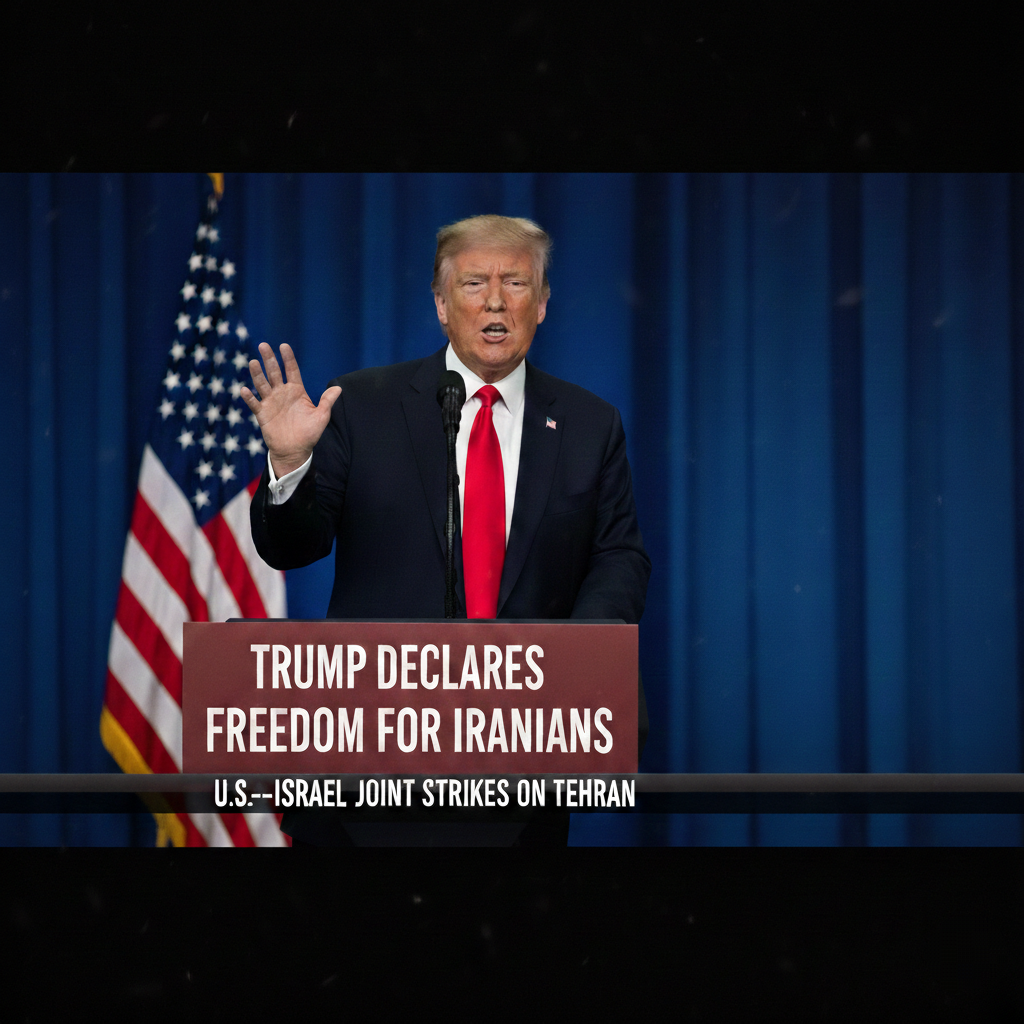
When President Donald Trump stepped before the cameras on February 28, 2026, the world held its breath. His words were not just another policy statement; they were a declaration of war and a plea for liberation. “The hour of your freedom is at hand,” he told the Iranian people, as U.S. and Israeli forces launched coordinated strikes against Iran’s military infrastructure.This moment was more than military strategy — it was theater, history, and a gamble rolled into one. Trump’s voice carried urgency, but also a promise: that the Iranian people could seize this turning point to reclaim their future.
A Region on Edge
For decades, the Middle East has been a chessboard of power struggles. Iran’s nuclear ambitions and its support for proxy militias have long alarmed Washington and Tel Aviv. Israel, feeling the threat at its doorstep, has pushed for decisive action. Now, with American firepower behind it, the strikes signal a new chapter — one that could either dismantle Iran’s grip or ignite wider conflict.
Trump’s Message: More Than Words
Trump’s speech wasn’t aimed at diplomats or generals. It was directed straight at ordinary Iranians. He painted their government as a “mass terror” machine, insisting that the world could no longer tolerate its actions. His appeal was emotional, almost revolutionary: rise up, take control, and let freedom replace fear.Whether Iranians see this as liberation or foreign intrusion remains uncertain. But the framing was clear — this was not just about missiles and targets, it was about people and destiny.
The Strikes: Precision and Purpose
Reports indicate that the joint operation focused on missile systems, naval assets, and facilities tied to nuclear development. The goal was twofold:
- To cripple Iran’s ability to project military power.
- To ensure nuclear weapons never enter Tehran’s arsenal.
Israel hailed the strikes as essential for survival. Iran, predictably, condemned them as aggression. And the rest of the world? Divided — some nations quietly supportive, others warning of dangerous escalation.
The Human Side
Behind the headlines are families, neighborhoods, and lives disrupted. Civilian safety is the shadow hanging over every military campaign. Trump’s promise of freedom may inspire hope, but for many Iranians, the immediate reality is fear of bombs, uncertainty, and survival.This is where the story becomes deeply human: freedom is not just a slogan, it is lived experience. And for Iranians, the path to it may be long and painful.
What Comes Next?
The strikes have opened a door, but no one knows what lies beyond. Will Iranians rise against their government? Will the regime tighten its grip? Will the region spiral into wider war?Trump has set the stage, but history will decide the outcome. His words — “the hour of your freedom” — may echo as a rallying cry or fade into the noise of geopolitics.
Q1: Why did Trump announce strikes against Iran?
President Trump stated that Iran’s regime had become a source of “mass terror” and posed a growing threat through its military buildup and nuclear ambitions. The strikes were intended to weaken Iran’s military infrastructure and prevent nuclear weapon development.
Q2: What does “hour of your freedom” mean?
Trump’s phrase was directed at the Iranian people, encouraging them to rise against their government. He framed the military campaign as both a strategic operation and an opportunity for Iranians to reclaim their future.
Q3: How did Israel respond to the strikes?
Israel strongly supported the joint operation, calling it essential for national survival and regional stability. Israeli leaders emphasized that Iran’s military capabilities had reached a dangerous level.
Q4: What has been Iran’s reaction?
Iran condemned the attacks, labeling them acts of aggression and vowing retaliation. Officials framed the strikes as violations of
Q5: Could this lead to a wider war in the Middle East?
Yes, escalation is a real risk. Analysts warn that the strikes could trigger regional conflict, disrupt global oil markets, and worsen humanitarian crises.
Q6: How might this affect ordinary Iranians?
For civilians, the immediate concern is safety and survival amid airstrikes. While Trump’s message promised freedom, many Iranians face uncertainty, fear, and potential instability in daily life.
Conclusion
February 28, 2026, will be remembered as a day of escalation and uncertainty. Trump’s declaration was bold, emotional, and risky. For Iranians, it was both a promise and a challenge. For the world, it was a reminder that freedom, war, and destiny often collide in ways that reshape history.
Reference