
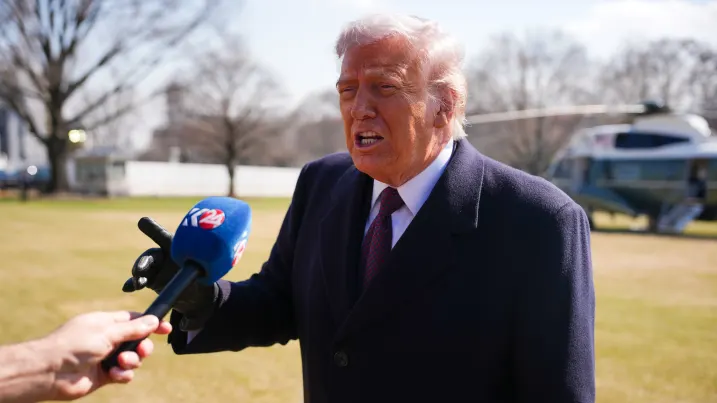
The world watched closely as President Donald Trump stepped outside the White House and spoke about Iran. His words carried both hope and warning: he doesn’t want war, but he admitted that “sometimes you have to.” That single phrase captured the tension of the moment — a leader caught between diplomacy and the possibility of military action.
A Leader’s Dilemma
Trump’s tone was almost weary. He repeated that he would “love not to use” the military, yet his frustration with Iran was clear. For decades, he argued, Iran has fueled violence across the region. Still, he left the door open for peace, saying he wants a “meaningful deal.” It’s the kind of statement that leaves allies and adversaries guessing — is this a promise of restraint or a warning of what’s to come?
Oman’s Quiet Role in the Background
While Trump spoke in Washington, Oman’s foreign minister was busy in quiet rooms, meeting U.S. officials and trying to mediate. His words were softer, almost poetic: “Peace is within our reach.” But even he admitted uncertainty. The contrast was striking — Trump’s bluntness versus Oman’s optimism — yet both voices carried the same urgency.
Military Shadows on the Horizon
Actions often speak louder than words. The USS Gerald Ford, one of America’s most powerful aircraft carriers, now sits off Israel’s coast. The U.S. Embassy has allowed staff to leave for safety reasons. These moves suggest preparation, even if Trump insists no decision has been made. It’s a reminder that diplomacy often unfolds under the shadow of military readiness.
Trump’s Frustration in Texas
In Corpus Christi, Trump’s words grew sharper. He accused Iran of decades of violence, painting a picture of suffering and destruction. His language was raw, almost personal — “blowing people’s legs off, arms off.” Yet even in that moment of anger, he circled back to the idea of peace. It’s a contradiction that defines his approach: tough talk paired with the hope of negotiation.
FAQs
Q1 Is war inevitable?
Not yet. Trump says no final decision has been made.
Q2 Why is Oman involved?
Oman has long played the role of mediator in Middle East conflicts, offering a neutral ground for dialogue.
Q3 What does the U.S. want from Iran?
A clear commitment: no nuclear weapons.
Conclusion
Trump’s words remind us that leadership often means walking a tightrope. He doesn’t want war, but he’s willing to consider it. Oman is pushing for peace, but U.S. military moves suggest preparation for the worst. The coming weeks will show whether diplomacy can win or whether history will add another chapter of conflict to the U.S.–Iran story.
Reference