
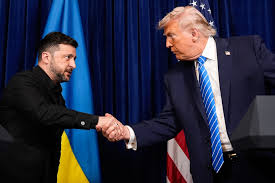
At the Munich Security Conference, Ukrainian President Volodymyr Zelenskyy declared that peace with Russia is only possible if the United States provides a minimum 20-year legally binding security guarantee. He rejected a 15-year proposal, stressing that Ukraine cannot sign a deal “without dignity” and requires firm U.S. assurances to safeguard its sovereignty.
Key Highlights
- Security Guarantee Demand: Ukraine insists on at least 20 years of U.S. commitment, rejecting shorter proposals.
- Binding Agreement: The deal must specify U.S. military support and participation in a European reassurance force.
- EU Membership Timeline: Zelenskyy pressed for a clear date for Ukraine’s EU accession, with 2027 mentioned by officials.
- Concerns Over Concessions: He criticized U.S. negotiators for focusing too much on concessions from Ukraine rather than Russia.
- Peace Talks Context: Trilateral negotiations between Ukraine, Russia, and the U.S. are scheduled for next week.
Analysis
Ukraine’s demand reflects its deep mistrust of Russia and skepticism about Western promises. A 20-year guarantee would tie U.S. military and political support to Ukraine for a generation, reshaping NATO’s security architecture.
For Washington, such a commitment raises questions about balancing European security with global priorities. Meanwhile, Ukraine’s push for EU membership underscores its determination to anchor itself firmly in the West, seeking not just peace but permanent integration into Europe’s political and economic system.
Conclusion
Ukraine’s stance sets the stage for tense negotiations. If Washington agrees to a 20-year guarantee, it would mark one of the most significant U.S. security commitments in Europe since the Cold War. The upcoming trilateral talks will determine whether such a historic deal is achievable—or whether the war continues without resolution.
Reference