
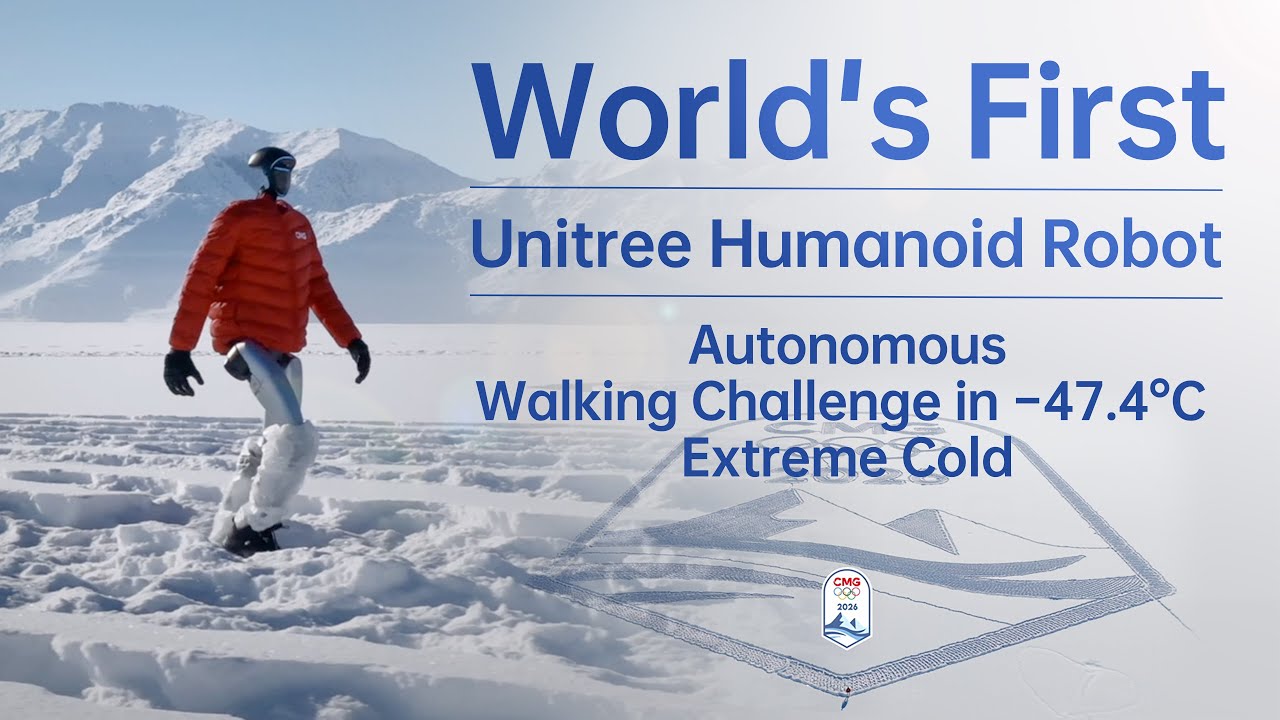
Unitree’s G1 humanoid robot has set a world record by walking 130,000 autonomous steps in the freezing Altay region of Xinjiang, China, enduring temperatures as low as –47.4°C (–53°F). This milestone highlights the growing push for environmental durability in robotics, proving that humanoid machines can operate in extreme natural conditions.
Key Highlights
Traced a Winter Olympics emblem across a snowfield measuring 186m x 100m.
Engineers protected the robot with an orange puffer jacket and plastic leg covers.
Navigation powered by China’s Beidou satellite system with centimeter-level accuracy.
Specs:
Height: 127 cm (4.2 ft)
Weight: 35 kg (77 lbs)
Battery: 9,000 mAh, up to 2 hours runtimeWalking
speed: 4.5 mph (6.5 ft/s)
Sensors: 3D LiDAR, Intel RealSense depth camera, microphone array
Control: UnifoLM AI model with reinforcement learning
Why This Matters
Proves humanoid robots can survive extreme cold.Sets a benchmark against rivals like Deep Robotics.
Affordable entry-level humanoid at RMB 99,000 (~US$14,240).
Unitree shipped 5,500 humanoid robots in 2025, showing rapid adoption.
Future Outlook
Cold-weather robotics could aid polar exploration, defense, and disaster recovery.
Satellite navigation + reinforcement learning will shape next-gen humanoids.
Consumer adaptations (like Caviar’s Aladdin robot) hint at lifestyle crossover.
Reference
https://interestingengineering.com/ai-robotics/unitree-humanoid-robot-record-snow-walk: Unitree G1 Humanoid Robot Walks 130,000 Steps in –53°F, Setting Cold-Weather Record