
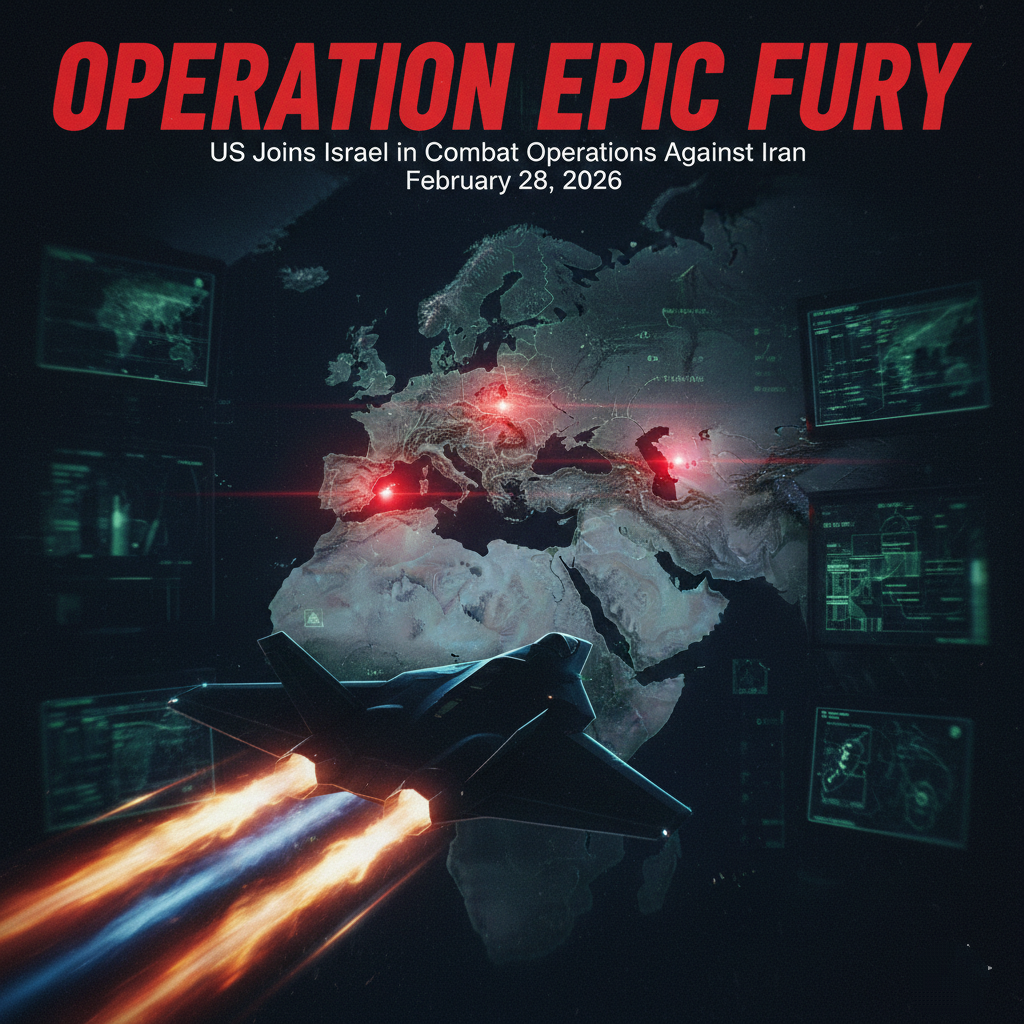
The night of February 28, 2026 will be remembered as one of the most tense moments in recent Middle Eastern history. Residents of Tehran were jolted awake by deafening explosions, as Israel confirmed it had launched pre‑emptive strikes on Iran. Hours later, the United States announced it was joining Israel in “major combat operations.” For families across the region, the news wasn’t just political rhetoric — it was the sound of sirens, the rush to shelters, and the fear of what tomorrow might bring.
Israel’s Pre‑Emptive Strikes
Israel’s Defense Minister, Israel Katz, declared the strikes were necessary to “remove threats to the State of Israel.
- Explosions lit up Tehran’s skyline, shaking homes and sending civilians scrambling for safety.
- Military analysts believe the targets included Iranian defense infrastructure.
- For Israelis, the announcement carried both relief and dread — relief that threats were being addressed, dread of inevitable retaliation.
US Involvement
The conflict escalated further when President Donald Trump announced that the US had begun major combat operations in Iran.
- American forces are coordinating with Israel to strike Iranian positions.
- The move signals Washington’s full commitment to backing Israel militarily.
- For many observers, this marks one of the most dangerous escalations in US‑Iran relations in decades.
Iran’s Retaliation
- Iran wasted no time in responding.
- The Revolutionary Guards launched missile and drone attacks toward Israel.
- Explosions were reported in Abu Dhabi, while Qatar intercepted an Iranian missile mid‑air.
- Bahrain confirmed a missile strike targeted the US Navy’s 5th Fleet headquarters.
- Ordinary citizens across the Gulf found themselves caught between geopolitics and survival, as air raid sirens echoed through the night.
Regional Fallout
The ripple effects spread quickly:
- The UAE closed its airspace, grounding flights and stranding travelers.
- Israel expanded operations into Lebanon, striking Hezbollah positions.
- Gulf nations braced for further escalation, with emergency measures activated.
Global Reactions
The world is watching with alarm.
- Leaders across Europe and Asia urged restraint, warning of catastrophic consequences.
- Oil prices surged as markets feared supply disruptions.
- The United Nations is preparing for an emergency session to address the crisis.
FAQs
Q1: Why did Israel launch strikes on Iran?
Israel claims the attacks were pre‑emptive, aimed at neutralizing threats from Iran’s military buildup.
Q2: How has Iran responded?
Iran retaliated with missile and drone strikes targeting Israel and US assets.
Q3: What role is the US playing?
The US has joined Israel in launching major combat operations against Iran.
Q4: Which countries are directly affected?
Explosions have been reported in Iran, Israel, Abu Dhabi, and Bahrain, with Qatar intercepting missiles.
Q5: What are the risks for global stability?
The escalation threatens regional security, global oil supply, and could trigger wider international involvement.
Conclusion
The Israel‑Iran conflict has entered a dangerous new chapter. With the US now directly involved, the stakes are higher than ever. Retaliatory strikes, regional fallout, and global economic tremors highlight the seriousness of the situation. For civilians across the Middle East, the crisis is not just about geopolitics — it is about survival, uncertainty, and hope that diplomacy can still prevent a full‑scale war.
Reference